Hear from Our Customers
When a bullet resistant glazing system is specified and installed correctly, the most immediate thing that changes is certainty. You stop wondering whether your storefront, your reception window, or your school’s front entrance would hold up if it had to.
Texas runs the full spectrum of threats. A jewelry counter inside an H-E-B in Harris County faces a different exposure than a control room at a Permian Basin energy facility or a front office window at a school district in the Hill Country. The right system for each environment is different — and that’s exactly the kind of nuance that gets lost when you’re buying from a vendor who doesn’t understand what they’re actually protecting against.
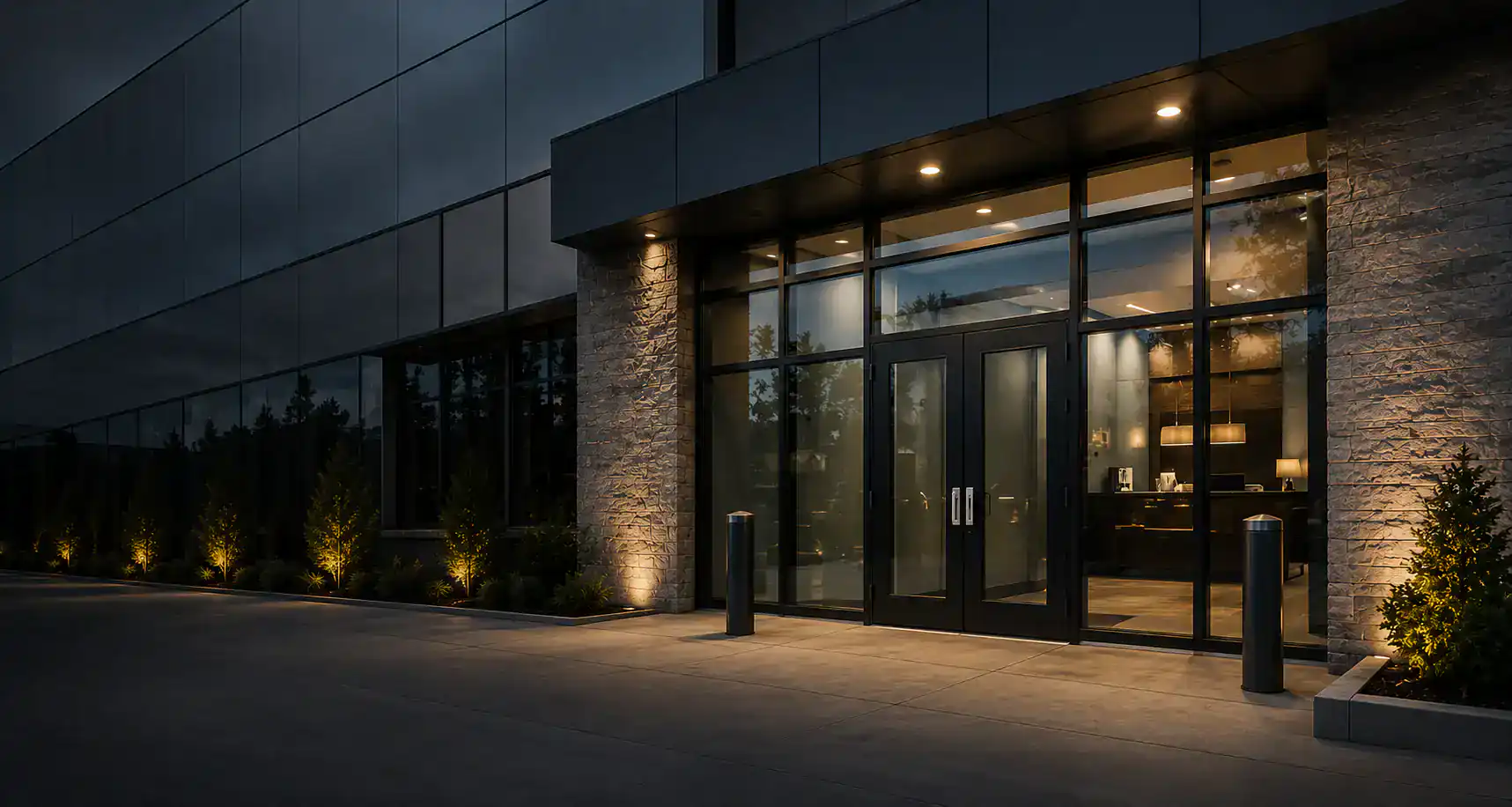
Texas’s Gulf Coast also brings something most other states don’t have to think about: hurricane season. If your facility sits anywhere along the corridor from Corpus Christi to Beaumont, you need glazing that handles both ballistic threats and storm impact. Our storefront systems are rated for bullet, blast, and impact resistance — which means one system addresses multiple exposures without requiring you to layer products from different manufacturers.
Action Bullet Resistant has been designing and building bullet resistant systems for more than 45 years. We were founded in direct response to real-world crime — gas station workers being shot through unprotected glass — and that origin still shapes how every system gets engineered today. This isn’t a glazing contractor who added “bullet resistant” to their service list. We’re a manufacturer with decades of material science, field experience, and a licensed Professional Engineer co-leading the operation.
Joseph Hayes, PE, LEED AP, co-owns and leads our engineering function. For Texas projects — whether that’s a school district in Bexar County spending TEA security funds, a federal courthouse along I-35, or an energy company campus in the Permian Basin — PE-stamped engineering support isn’t a bonus. It’s often a procurement requirement. We provide it as a standard part of the process.
Every system is manufactured at our West Islip, New York facility and ships nationwide. For Texas government and military buyers at installations like Fort Cavazos or Fort Sam Houston, that means full Buy American compliance without exception.
It starts with understanding what you’re actually protecting against. Before any product gets specified, the threat level needs to be established — not just “we want bullet resistant glass” but what caliber, what volume of fire, and what environment. A pharmacy window on a Houston strip mall has a different exposure profile than a Border Patrol processing station in Laredo or a school entrance vestibule in a district that just received a TEA security grant.
Getting that threat assessment right at the front end is what determines the correct UL 752 level and the right product for the job. From there, our engineering team develops the full specification package — architectural drawings, 3-part CSI specs, and technical data sheets. For Texas architects and general contractors working on commercial or institutional projects, this documentation is what moves a project from design intent to compliant installation.
Installation timing in Texas matters more than most buyers realize. School security upgrades are typically executed during summer break — June through August — which is also when Texas’s extreme heat can complicate exterior glazing work in central and west Texas. Gulf Coast projects are best scoped and contracted in late winter or early spring, ahead of hurricane season. Our team accounts for these realities when helping clients plan project timelines, so the work gets done in the right window, not the wrong one.
Ready to get started?
We manufacture across the full UL 752 spectrum — Levels 1 through 10 — which matters in Texas because the state’s buyer base is genuinely that wide. A convenience store operator on I-10 near San Antonio likely needs a Level 1 or Level 2 transaction window. A bank branch in the Dallas–Fort Worth Metroplex typically specifies Level 3 or higher. A federal courthouse, a military installation like Dyess Air Force Base in Abilene, or a critical infrastructure facility along the Gulf Coast may require Levels 5 through 8 — or higher, with blast resistance as a co-requirement.
Our product line covers everything a Texas project might need: bullet resistant windows, bullet resistant doors in aluminum and steel, bullet resistant storefronts, curtain wall systems, stainless steel transaction windows with integrated deal trays, fiberglass ballistic wall panels, and LytArmor Flex — a proprietary flexible ballistic panel that conforms to curved surfaces and complex architectural designs. For Texas’s current wave of architecturally ambitious commercial construction, particularly in Austin and Dallas, LytArmor Flex opens protection options that rigid panels simply can’t reach.
For Texas school districts working through the HB 3 appropriation process, we provide the complete documentation package that procurement offices require: UL 752 certification records, PE-stamped engineering drawings, 3-part specifications, and technical data sheets. Every product is made in the USA, which satisfies Buy American requirements for the state’s substantial federal and military project pipeline.
Texas House Bill 3, passed in 2023, mandated security window film on all K-12 school glass and gave the Texas Education Agency a one-time $1.1 billion appropriation for physical security improvements across school campuses statewide. The law sets a minimum standard — security film — but it does not cap what districts can spend or specify. Many Texas school districts are using their TEA appropriations to go well beyond the film requirement, specifying full UL 752-rated bullet resistant glazing for entry vestibules, front office reception windows, and main entrance doors.
The distinction matters because security film and UL 752-certified ballistic glazing are not the same thing. Film has not been independently tested to the UL 752 standard and is not a substitute for rated ballistic glass in high-exposure environments. If your district is working through the TEA procurement process and wants to specify a system that will hold up to scrutiny — from the school board, the state, and the public — UL 752-certified glazing with PE-stamped engineering documentation is the defensible choice.
For most Texas retail environments — gas stations, convenience stores, pharmacy counters, jewelry counters inside grocery stores — UL 752 Levels 1 through 3 cover the realistic threat range. Level 1 is rated for three shots from a 9mm handgun, which aligns with FBI data showing handguns account for approximately 80% of retail incidents. Levels 2 and 3 step up to .357 Magnum and .44 Magnum respectively, which provides meaningful additional protection for higher-risk locations.
Texas has seen a documented and recurring pattern of smash-and-grab robberies targeting jewelry counters inside grocery stores — incidents in Harris County, East Dallas, Fort Worth, and Sugar Land in 2024 alone resulted in losses ranging from $20,000 to $600,000 per event. For jewelry retailers operating inside high-traffic grocery or supermarket environments, a Level 2 or Level 3 bullet resistant transaction window or display case barrier is a reasonable minimum. The right level depends on your specific location, your hours of operation, and what you’re protecting — and our engineering team can help you make that call based on the actual threat profile, not a generic recommendation.
This is a legitimate concern for Texas installations, and it’s one that buyers in cooler northern states rarely have to think about. Polycarbonate and acrylic bullet resistant materials can yellow, craze, or develop surface haze over time when exposed to prolonged UV radiation and high temperatures — conditions that are routine across central Texas, west Texas, and the Permian Basin, where summer temperatures regularly exceed 100°F for extended periods.
The answer is UV-resistant coatings, which are a standard specification for any exterior-facing bullet resistant glazing installed in Texas. Properly coated systems are rated for a lifespan of 15 to 20 years or more before any meaningful degradation in optical clarity. Interior-facing applications — transaction windows, reception barriers, and cashier enclosures — face less UV exposure and typically perform even longer. What you want to avoid is any system that doesn’t specify UV protection as part of the coating package, because in Texas’s climate, that’s not a nice-to-have. It’s a basic durability requirement. Our systems are specified with this in mind.
Standard bullet resistant glass is not automatically rated for hurricane or storm impact — those are separate certifications, and you should not assume a ballistic rating covers a wind load or debris impact rating. That said, our storefront systems are rated for bullet, blast, and impact resistance, which does provide meaningful overlap with storm protection requirements for many Texas Gulf Coast applications.
If your facility is located in the hurricane exposure zone — anywhere from Corpus Christi through Houston to the Beaumont-Port Arthur area — you need to confirm that any glazing system you specify meets both the ballistic rating you need and the impact resistance requirements for your wind zone. Texas follows the International Building Code, and coastal jurisdictions have specific wind speed and impact requirements that govern glazing selection. The practical answer is to bring this up during the specification phase so the system can be engineered to satisfy both requirements simultaneously.
For Texas design and construction professionals, the specification support package is often what determines whether a project moves forward cleanly or gets stuck in back-and-forth with building departments, procurement offices, or federal contracting officers. We provide the full documentation set: architectural drawings, 3-part CSI specifications, technical data sheets, and direct access to a PE-led engineering team that can answer specification questions and sign off on project-specific engineering requirements.
This matters particularly for Texas projects with federal or military components — facilities at Fort Cavazos, Fort Sam Houston, or NAS Corpus Christi, for example, require Buy American-compliant products and often need PE-stamped documentation as part of the submittal package. It also matters for school district projects moving through the TEA procurement process, where the specification has to survive public scrutiny and board approval. Our manufacturing is 100% American-made out of West Islip, New York, and our engineering team is equipped to support Texas projects from initial specification through submittal review.
Once bullet resistant glass takes a direct hit, it needs to be replaced — full stop. The structural integrity of the glazing is compromised after impact, even if the glass appears to have held together visually. This is true regardless of the UL 752 level. The glass did its job, but it cannot be relied upon to perform again, and leaving a compromised panel in place creates a real gap in protection that may not be obvious until it’s too late.
Replacement is also worth considering if your existing glazing has yellowed significantly, developed surface crazing, or is approaching the 15-to-20-year mark — all of which are realistic scenarios for Texas installations that have been in place since the early-to-mid 2000s and weren’t specified with UV-resistant coatings. In Texas’s climate, degradation can accelerate on exterior-facing systems that weren’t properly specified for the UV and heat exposure they’d face. The replacement process follows the same specification and engineering path as a new installation — same UL 752 level confirmation, same framing compatibility check, same documentation. We support existing clients through that process, not just new installations.
Useful Links
Other Services we provide in Texas