UL 752 Levels 1 Through 10
Every product we manufacture is independently tested and UL 752-listed - covering the full range from handgun to military-grade ballistic threats.
Bulletproof Police Station Systems United States
Most U.S. police stations were built without ballistic protection in mind. We engineer complete, UL 752-rated systems - windows, doors, transaction barriers, and panels - custom-fit to your facility.

The Action difference
Every product we manufacture is independently tested and UL 752-listed - covering the full range from handgun to military-grade ballistic threats.
Our co-leader holds a Professional Engineer license and LEED AP designation - so we can deliver PE-stamped drawings for government procurement requirements.
All systems are designed and manufactured in West Islip, New York - satisfying Buy American requirements for federally funded law enforcement projects.
We've completed real installations for U.S. law enforcement agencies, including the Staten Island 121st Precinct - verifiable work, not marketing claims.
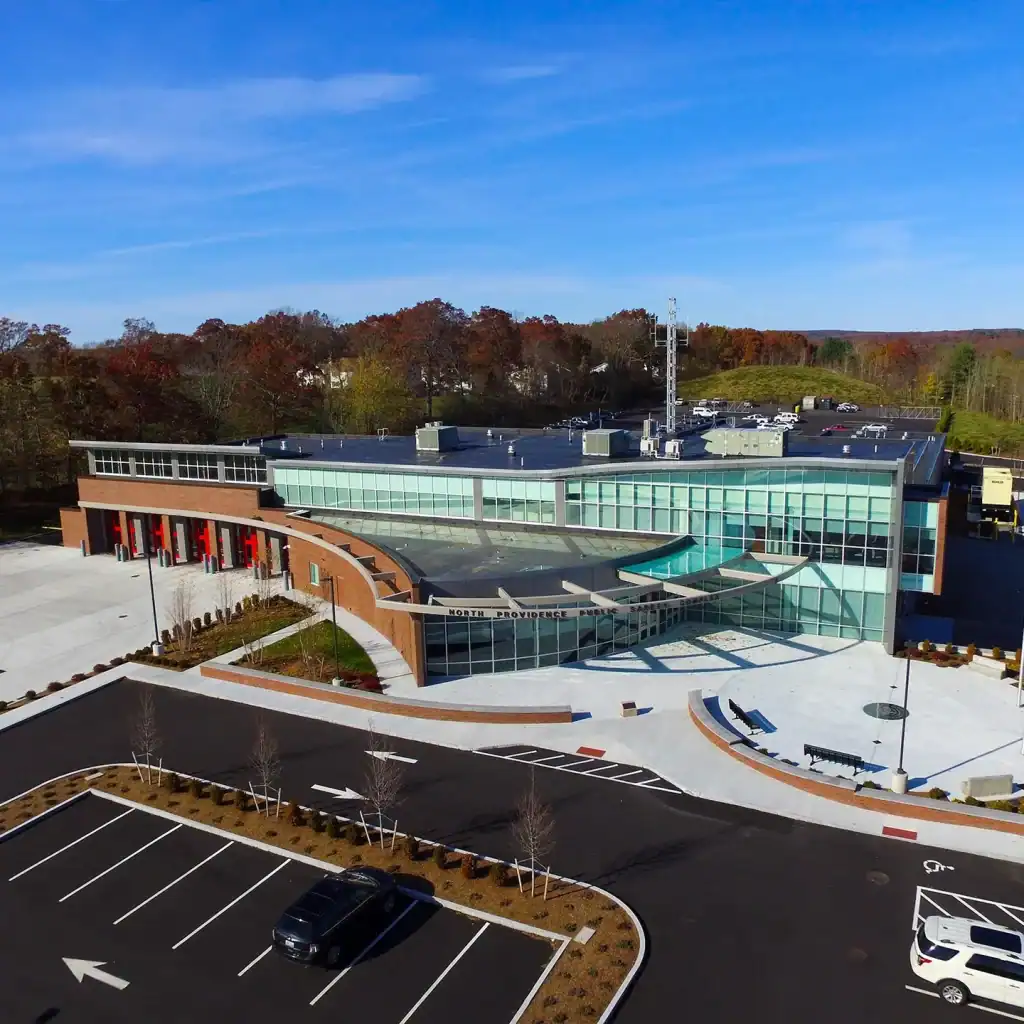
Law Enforcement Ballistic Barrier Systems
In 2024, assaults on law enforcement officers hit a decade-high rate of 13.5 per 100 officers, according to the FBI. Ambush-style attacks - where officers have no warning - numbered 115 incidents in 2023 alone. The threat isn't only on the street anymore. The station itself is a target.
Most U.S. police stations were designed and built decades ago, long before anyone was engineering facilities to withstand rifle fire or coordinated attacks. That means the front desk, the lobby windows, the sally port, and the evidence room are often wide open - structurally speaking.
We design and install complete ballistic protection systems for police stations across the United States. Not just a window here or a panel there - a coordinated, zone-by-zone approach that matches the right UL 752 protection level to each specific area of your facility.
Ballistic Protection for Police, United States
Police Station Security Windows, United States
This is one of the most common and costly misunderstandings in law enforcement facility upgrades. A piece of rated glazing installed in an unrated frame, anchored to an unrated wall, is not a UL 752-compliant system. The bullet doesn't care about the glass if the frame fails first.
True ballistic protection requires every element - the glazing, the frame, the anchoring, and the hardware - to be rated and tested together. That's what we build. Our police station security windows are engineered as complete assemblies, not afterthoughts.
We also want to address something that comes up regularly: ballistic film. No ballistic film product has been tested and listed by Underwriters Laboratories as meeting any level of UL 752 bullet resistance. Film can reduce glass spall in some situations, but it will not stop a bullet. If someone is recommending film as a ballistic solution for your station, that's a specification gap worth knowing about before you sign anything.


Police Lobby Security and Sally Port Systems
The public lobby is where the highest volume of unpredictable contact happens. We install rated glazing assemblies, ballistic reception counters, and lobby barriers that integrate with your existing architecture - so the space still feels approachable to the community you serve, while your staff is protected behind a system that has been independently tested to stop the threats you're actually worried about.
The sally port is a different kind of problem. It's a controlled entry point, but the windows and interlocking door systems in most older stations were never designed with ballistic exposure in mind. We engineer sally port security windows and interlock systems that close that gap without disrupting vehicle flow or operational tempo.
For dispatch rooms, evidence rooms, and administrative areas near public-facing windows, we specify the protection level based on each zone's realistic threat exposure - not a one-size-fits-all number. Our systems span UL 752 Levels 1 through 10, so we're not forcing you into a product that's either under-specified or unnecessarily overbuilt.
Our Police Station Security Process
We assess each area of your facility - lobby, sally port, dispatch, evidence room - and match the right UL 752 protection level to each zone's real threat exposure.
Every component is custom-engineered and manufactured in West Islip, New York - delivered as a ready-to-assemble system designed for your specific openings and conditions.
Our team installs the complete system with minimal operational disruption, and provides all documentation - including PE-stamped drawings - required for government procurement and compliance.
For most public-facing lobbies in U.S. police stations, UL 752 Level 3 is the most commonly specified protection level - it's rated to stop three shots from a .44 Magnum at close range. That covers the handgun threats most realistic to a lobby environment. However, if your station is in a higher-threat area, or if your exterior windows have direct line-of-sight exposure to a public street, Level 4 or Level 5 may be more appropriate. Level 4 stops a .30-06 rifle round; Level 5 stops 7.62mm NATO FMJ fire. The right answer depends on your specific facility layout and threat profile, which is exactly what we evaluate before recommending anything. Industry data shows that roughly 75% of law enforcement customers now specify Level 3 barriers, with more than 20% upgrading to Level 5 - a significant shift upward from where the industry was even five years ago.
Yes - and that's actually the most common scenario we work with across the United States. The vast majority of police stations that need ballistic upgrades are existing buildings, not new construction. Our systems are custom-engineered to fit your existing openings and architectural conditions, which means we're not asking you to tear out walls or rebuild from scratch. We measure your actual openings, fabricate components to fit, and install them as a complete rated assembly. The key is that everything - glazing, frame, anchoring, hardware - has to be part of a rated system. We don't just swap in a piece of ballistic glass and call it done. The whole assembly has to be UL 752-compliant, and that's what we deliver, even in retrofit conditions.
A sally port is a controlled vehicle entry point - typically a two-door interlocking system that prevents a vehicle from entering the secure interior of the facility until the first door is confirmed closed and the occupant is cleared. The windows in a sally port face a unique threat profile: they're exposed to vehicle-borne threats, close-range handgun fire, and potentially forced-entry attempts, all in a space where officers are often working at close range to the public. Standard police station security windows in a lobby are designed for a different geometry and threat distance. Sally port security windows need to account for the interlocking system, the frame conditions around a vehicle bay, and the specific ballistic exposure of that zone. We engineer each sally port window as part of the complete entry control system - not as a standalone glazing product dropped into an existing frame.
This is one of the most common questions we hear, and the good news is that there are real funding pathways available to U.S. law enforcement agencies. The COPS Office offers grants that can be applied to facility safety improvements. FEMA Hazard Mitigation Grants have been used for physical security hardening at public safety facilities. State-level Fixed Capital Outlay programs are another avenue - for example, a Florida town received $1.5 million through that program specifically for public safety facility enhancements. Many agencies also phase their installations, prioritizing the highest-risk zones - typically the lobby and transaction windows - in the first phase, then expanding to sally ports, evidence rooms, and dispatch areas as additional funding becomes available. We can work within a phased approach and provide the documentation your procurement office needs to support a grant application.
It doesn't have to, and for a 24/7 law enforcement facility, it really can't. We design our installations to minimize disruption to active operations. In practice, this usually means phasing the work - completing one zone or one set of openings at a time, working around your operational schedule, and sequencing the project so that no critical area is taken offline without a plan for maintaining coverage. The custom-engineered, ready-to-assemble nature of our systems also helps here. Because components are fabricated to exact dimensions before they arrive on site, installation time is significantly reduced compared to field-fabricated or modified products. We've completed installations in active law enforcement facilities, including the Staten Island 121st Precinct, and operational continuity is always part of how we plan the project from day one.
Ballistic film and bullet-resistant glazing are fundamentally different products with different performance. No ballistic film product has been tested and listed by Underwriters Laboratories as meeting any level of UL 752 bullet resistance. That's not a competitive claim - it's a fact from the testing standard itself. Film can reduce glass spall in some scenarios, but it will not stop a bullet from penetrating the glass. A true ballistic barrier is a rated glazing assembly - typically ranging from three-quarters of an inch to four inches thick depending on the protection level - installed in a rated frame with rated anchoring and rated hardware. The entire assembly is what gets tested, and the entire assembly is what has to be UL 752-listed for the protection to be real. If you're evaluating options for your station and someone is recommending film as a ballistic solution, that's a specification gap that puts your people at risk.
Start with the right specification
Send us your drawings, your requirements, or your questions. Talk with the team that engineers and manufactures your system.