UL 752 Certified, Levels 1–10
Every system we manufacture is independently tested and certified to UL 752 standards - the industry's most rigorous ballistic rating benchmark.
Bulletproof Glass in the United States
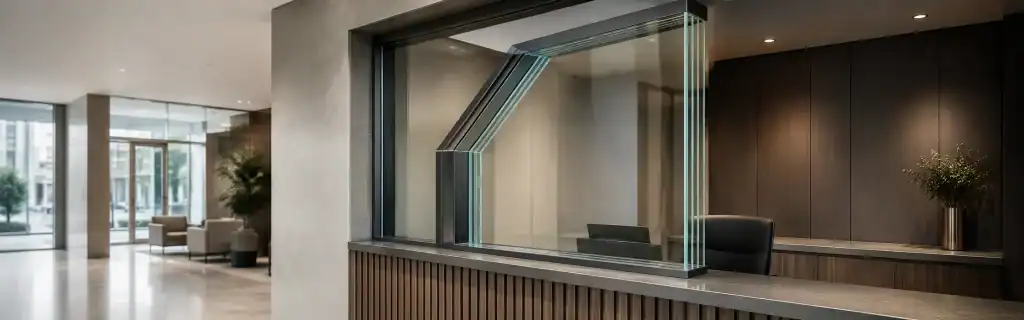
Most bullet resistant glass in the United States fails not because the glazing was wrong - but because the system around it wasn't rated to match. We engineer and manufacture the entire assembly, tested together, certified together.
The Action difference
Every system we manufacture is independently tested and certified to UL 752 standards - the industry's most rigorous ballistic rating benchmark.
Our company is led by a licensed Professional Engineer. That means every product is designed to perform under pressure, not just pass a sales sheet.
All of our bullet resistant glass systems are manufactured in the United States at our West Islip, New York facility, making them Buy American Act compliant for government and federal projects.
Our systems meet DOD minimums, GSA Blast criteria, NIJ standards, and UFC/ISC requirements - the full stack that institutional and government buyers actually need.
Bullet Resistant Glass in the United States
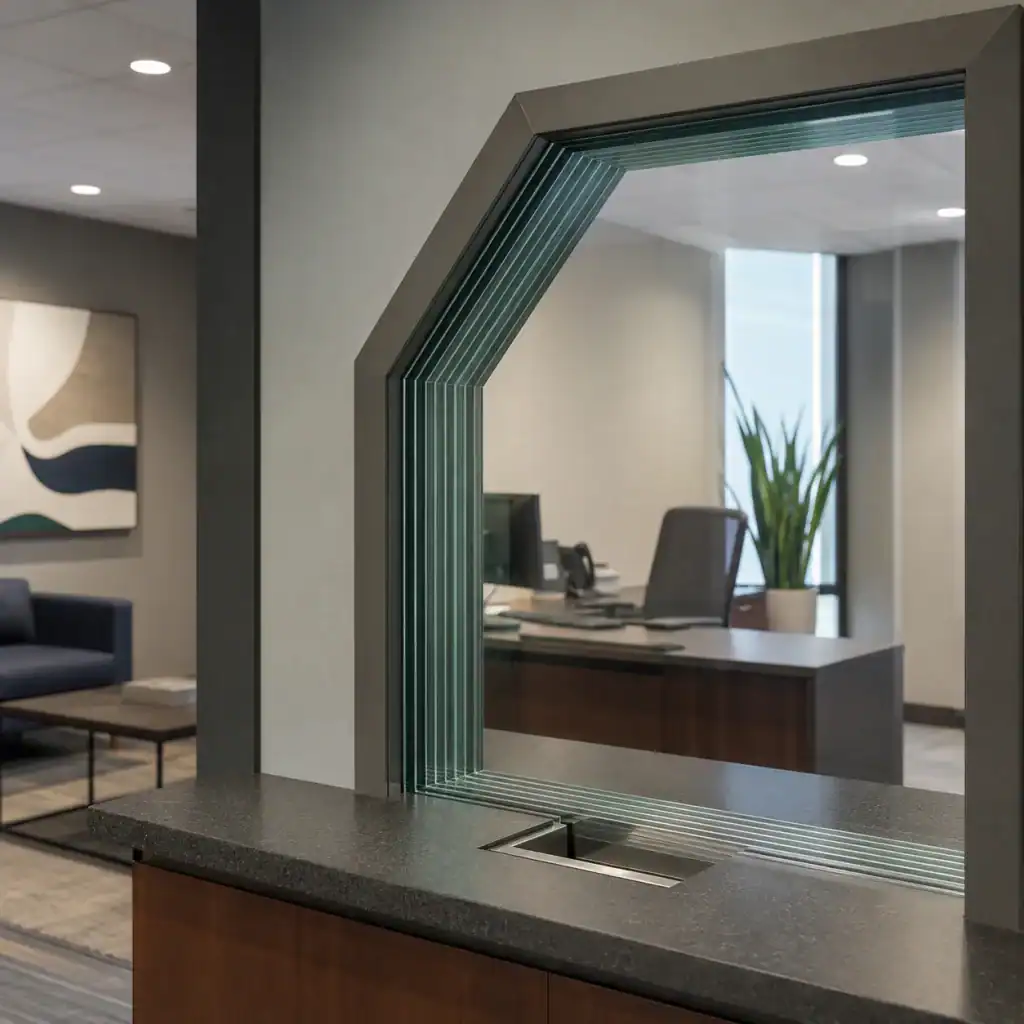
The term "bulletproof" gets used loosely. Nothing is truly bulletproof - and any manufacturer who tells you otherwise is selling you a feeling, not a specification. What actually exists, and what we've been building for more than 45 years, is bullet resistant glass: glazing systems engineered to withstand specific calibers, velocities, and shot counts under controlled, third-party testing conditions defined by UL 752.
Across the United States, facilities of every type - banks, schools, government buildings, police stations, pharmacies, and convenience stores - rely on ballistic glass to protect the people inside. The question isn't whether you need it. It's whether what you're looking at is actually rated to handle the threat you're facing, and whether the entire system - not just the glass - will hold when it counts.
That's where we come in. Action Bullet Resistant designs, engineers, and manufactures complete bullet resistant glass systems from our facility in West Islip, New York, and delivers them to projects across the country.
Ballistic Glass Systems, United States
Bullet Resistant Acrylic and Polycarbonate
Not all bullet resistant glass in the United States is the same material - and the difference matters more than most buyers realize. Bullet resistant acrylic is the most common choice for lower-level commercial protection, particularly in retail environments, gas stations, and transaction windows. It's economical, optically clear, and effective for UL 752 Levels 1 through 3. The tradeoff is that it can scratch over time and has limitations at higher protection levels.
Bullet resistant polycarbonate is significantly stronger and more flexible under impact, making it well-suited for mid-level protection requirements. Layered polycarbonate systems can reach higher ratings, though they're more susceptible to surface weathering without a glass exterior layer to protect them.
For the highest commercially available protection, glass-clad polycarbonate is the standard. It combines multiple glass layers - which disrupt the incoming projectile - with polycarbonate layers that absorb and disperse the energy, held together by interlayers that capture any fragments. It's heavier and more expensive, but it's the material that performs when the threat is a rifle round, not a handgun. We also manufacture laminated ballistic glass systems for applications where optical clarity and architectural integration are priorities. The right material depends on your threat level, your environment, and what the opening needs to do.

Security Glass Systems, United States
One of the most common mistakes buyers make - especially when cost is a concern - is considering security window film as an alternative to certified bullet resistant glass. It isn't. Window film, even heavy-duty security film, is typically between 3 and 8 mils thick - roughly the thickness of a credit card. It can reduce glass spalling in certain scenarios, but it cannot reliably stop a projectile. It is not rated to UL 752. It is not bullet resistant glazing.
This matters because the consequences of that misunderstanding aren't theoretical. Facilities that install film and believe they've addressed their ballistic risk have not. They've created a false sense of security that can cost lives.
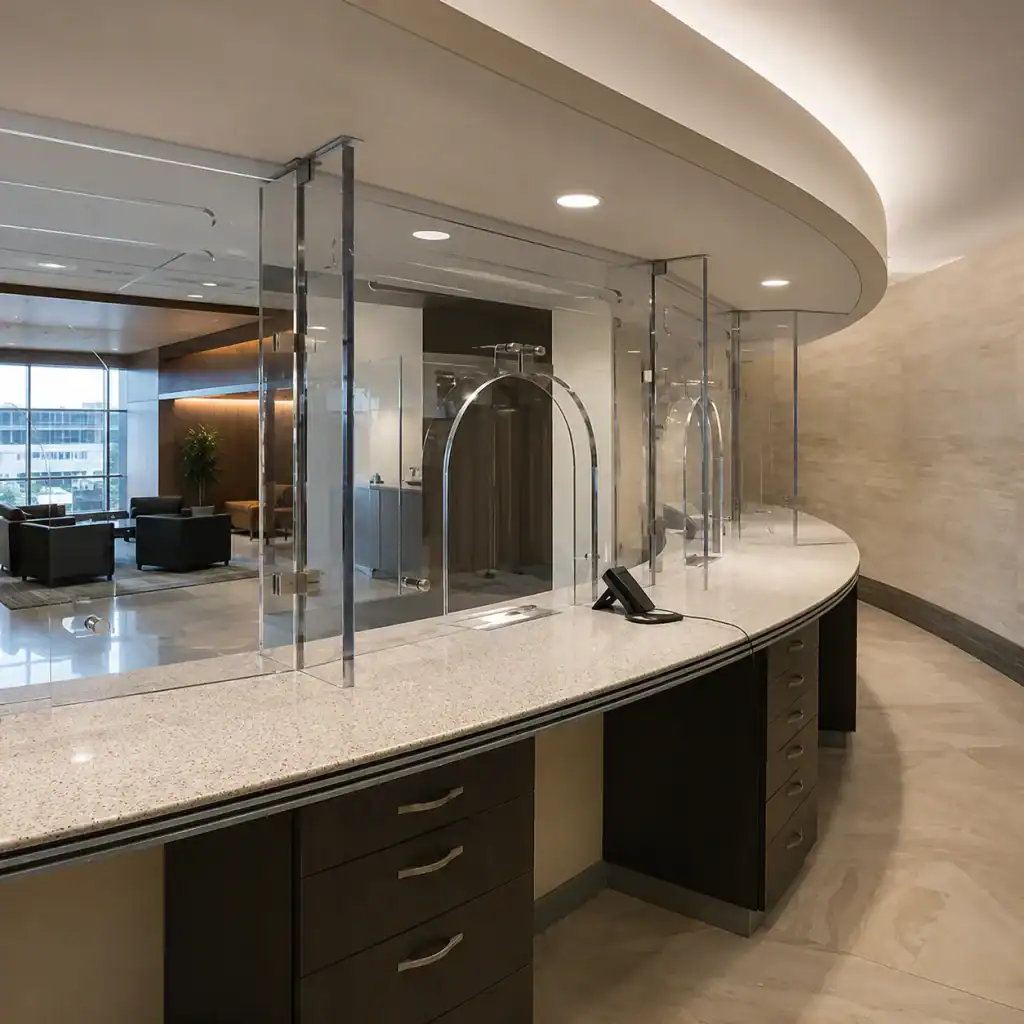
True security glass in the United States - the kind that carries a legitimate UL 752 certification - requires multiple layers of rated material, tested as a complete assembly by an independent laboratory. That's what we manufacture. If you're weighing film against glazing, the answer is clear: they're not in the same category, and they shouldn't be compared as if they are.
Getting Bulletproof Glass in the United States
We start by understanding what caliber and risk environment you're protecting against - so the system is right-sized, not over- or under-specified.
We custom-engineer your glazing, framing, and hardware as a complete assembly, precision-fabricated to your exact opening dimensions and UL 752 specification.
Your ready-to-assemble system ships to your project site with full technical support - shop drawings, specifications, and installation guidance included.
"Bulletproof" implies that nothing can get through - and that's not how glazing works. Every ballistic glazing system is rated to stop specific threats under specific conditions: a defined caliber, a defined velocity, and a defined number of shots. Exceed those parameters and you've exceeded the rating. That's why the industry uses "bullet resistant" - it's accurate. Our systems are rated to UL 752 standards, which define ten protection levels tested by independent laboratories. When you see a UL 752 certification on a product, you know exactly what it was tested to stop. That's a meaningful claim. "Bulletproof" is not.
Both - and this is one of the most important things to understand before you buy anything. Bullet resistance is a system property, not a glazing property. A high-rated glass panel installed in a sub-rated frame does not give you the protection level of the glass. The projectile doesn't stop at the glass - it interacts with the entire assembly. If the frame fails, the glazing can be dislodged or compromised regardless of its individual rating. This is why we design and manufacture complete systems - glazing, framing, and hardware - all tested and certified together to the same UL 752 level. Buying glass from one source and framing from another is a risk that's easy to avoid.
It depends on the threat environment specific to your facility. For most retail, banking, and commercial applications in the United States - where the primary threat is handgun fire - UL 752 Levels 1 through 3 cover the most common calibers: 9mm, .357 Magnum, and .44 Magnum. Levels 4 and 5 address shotgun rounds and higher-powered handguns. If your facility faces rifle threats - government buildings, military installations, high-security corporate environments - you're looking at Levels 6 through 8, which cover 5.56mm and 7.62mm rifle rounds. Specifying a higher level than your threat requires adds cost and weight without improving your actual safety. We help you match the specification to the real risk.
Both, and the requirements are different. Interior applications - transaction windows, teller lines, pass-throughs - typically prioritize protection level and optical clarity. Exterior applications add thermal performance to the equation. Our systems include insulated ballistic glass unit configurations that combine ballistic protection with energy efficiency through air- or gas-filled thermal breaks. These meet NYC thermal testing compliance and are appropriate for exterior fenestration in commercial and institutional buildings across the United States. Whether you're retrofitting an existing building or specifying for new construction, the system needs to account for both the ballistic requirement and the building envelope requirement.
Yes - and for many federal projects, it's not optional. The GSA P100 federal design guide mandates ballistic protection in courthouses and federal agency offices. Military installations require systems that meet DOD minimum standards. Federal procurement often requires Buy American Act compliance, which means the glazing system must be manufactured in the United States. Our systems are manufactured at our facility in West Islip, New York, and are certified to UL 752, DOD minimums, GSA Blast criteria, and UFC/ISC requirements - the full range of standards that government and military specifiers need. If you're working on a federal or institutional project, we can provide the documentation your procurement process requires.
We go well beyond shipping a product. For architects, we offer a one-hour continuing education course through AEC Daily that covers bullet resistance, fenestration fortification, and building safety - accredited across more than 22 organizations including AIA, GBCI, PE, and CSI. It's a resource that helps design professionals specify ballistic glazing correctly from the start, not troubleshoot it after the fact. For contractors and project teams, we provide CSI specifications, shop drawings, and technical support throughout the project lifecycle. Our company leadership includes Joseph Hayes, PE, LEED AP - a licensed Professional Engineer who brings genuine engineering accountability to every system we produce. When you need a manufacturer who can support the full project, not just deliver a product, that matters.
Send the drawings, the UL 752 level, or just the question. You reach the people who build the opening, not a call center.
We've received your question about:
Bullet Resistant GlassOur team will follow up using the contact details you provided.
Start with the right specification
Send us your drawings, your requirements, or your questions. Talk with the team that engineers and manufactures your system.