Hear from Our Customers
When you’re running a pharmacy in Queens, managing a bank branch in Albany, or overseeing a school district on Long Island, the question isn’t whether you need bullet resistant glass. It’s whether the system you install will actually hold up — to the threat, to the building code, and to the architectural standards your space demands.
New York’s building stock is unlike anywhere else in the country. Pre-war masonry storefronts in Brooklyn, mid-century curtain walls in Midtown, historic facades in SoHo — none of these play well with off-the-shelf ballistic glazing. What works in a strip mall in another state doesn’t translate to a ground-floor retail space on Fifth Avenue or a government services office in the South Bronx. The system has to be engineered for the opening, not just dropped into it.
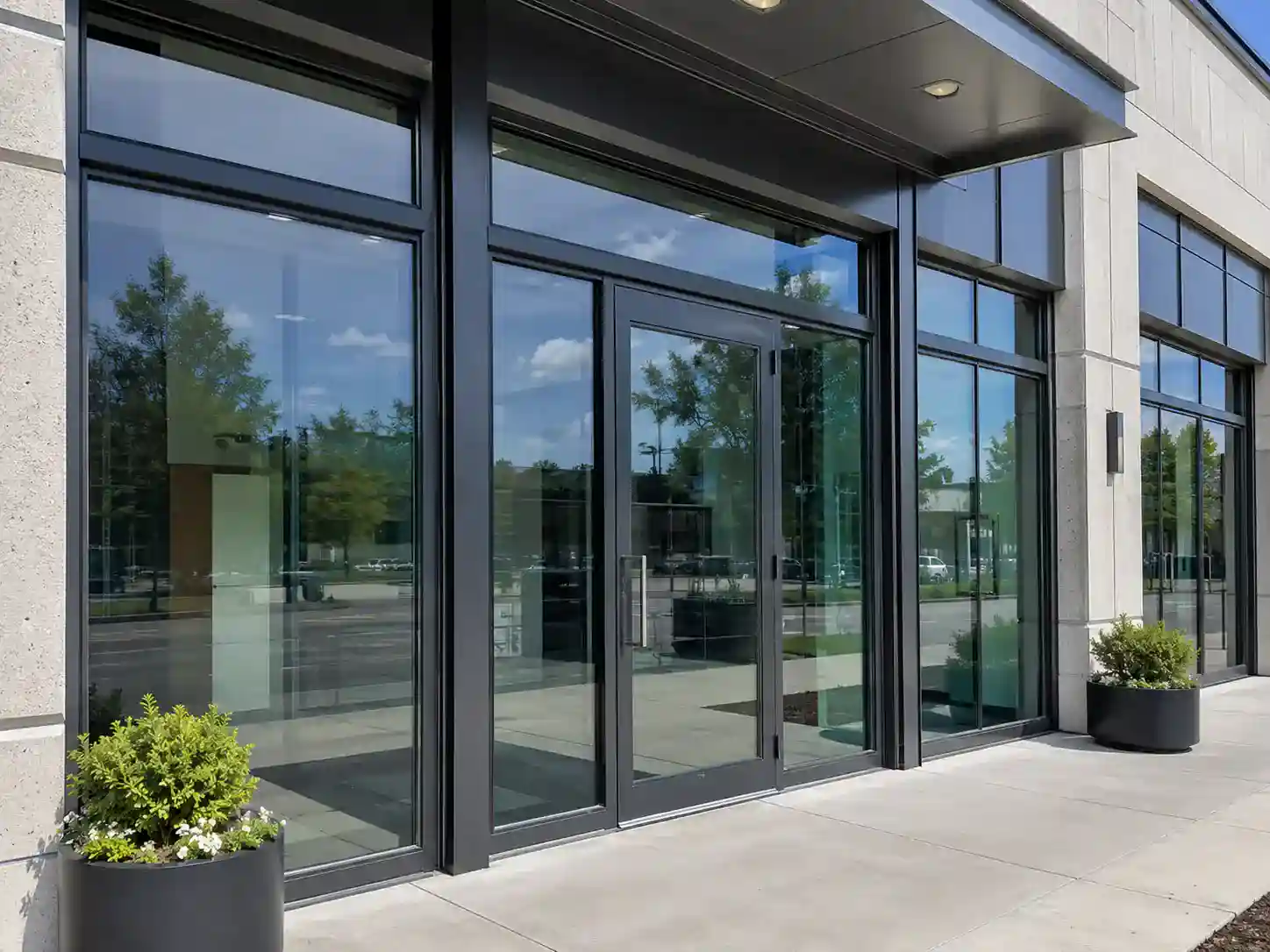
That’s where the difference shows. A properly specified, custom-engineered bullet resistant glazing system doesn’t look like a security retrofit. It looks like it was always part of the building. Beyond aesthetics, it gives the people inside — your employees, your customers, your students — a real, tested layer of protection that a security camera or a panic button simply can’t provide. When something happens, the glass is already doing its job.
We’re not a national company routing your order through a warehouse three states away. Our facility is in West Islip, Suffolk County — on Long Island, in New York, where we’ve been designing and building bullet resistant windows, doors, storefronts, curtain walls, and transaction systems for more than 45 years.
We’re co-led by Joseph Hayes, PE, LEED AP — a licensed Professional Engineer. That matters in New York specifically, because installing ballistic glazing in a New York City building isn’t just a product decision. It’s a permitting process. The NYC Department of Buildings requires engineering documentation and stamped drawings for structural glazing changes, and our team is set up to provide exactly that. You’re not left to figure out the compliance side on your own.
We’ve been featured on News 12 Long Island as a “Made on Long Island” manufacturer, supplying systems to local school districts and clients across the state. From Nassau and Suffolk Counties to the Capital District to Western New York, we know the state’s building conditions, its codes, and its buyers — because we’ve been working here the entire time.
It starts with understanding what you actually need. Not every New York facility faces the same threat profile. A check cashing business in the Bronx has different exposure than a federal courthouse in Albany or a school entry vestibule in Nassau County. The right protection level — UL 752 Level 1 through Level 10 — depends on the likely threat type, the application, and the structural realities of the opening you’re working with.
Once the threat level and system type are determined, the engineering work begins. For New York City projects, this includes preparing documentation sufficient for NYC Department of Buildings permit approval — stamped drawings, product specifications, and technical data that meet DOB requirements for structural glazing. For projects outside the five boroughs, the process follows New York State Building Code and local building department requirements, which vary by municipality. The weight and structural demands of UL 752-rated ballistic glazing require a licensed engineering review — and that’s built into how we operate.
Fabrication happens at our West Islip facility. Because the manufacturing is local, lead times for New York projects are shorter than they would be working with an out-of-state supplier. When the system arrives, it’s ready to assemble — engineered to fit the opening, rated for the threat level, and built to look like it belongs there. Installation is coordinated to minimize disruption to your operation, whether that’s a retail space on the I-495 corridor in Nassau County or a government office building in Albany.
Ready to get started?
New York’s climate puts glazing systems through real stress. The freeze-thaw cycles that hit Long Island and upstate New York every winter expand and contract framing and sealants repeatedly. The heat and humidity of a New York City summer accelerate UV degradation in acrylic and polycarbonate materials that aren’t properly coated. For properties along the coast — lower Manhattan, Staten Island, the south shore of Long Island — blast resistance isn’t just a government facility concern. It’s a practical consideration for any building that faced what Hurricane Sandy demonstrated about storm pressure and structural vulnerability.
We manufacture systems rated for both ballistic and blast threats, across the full UL 752 spectrum from Level 1 through Level 10. A bodega in the South Bronx that needs Level 1 or 2 protection against handgun threats gets the same engineering attention as a federal building in Manhattan requiring Level 7 or 8 rated ballistic glass. Our product line covers bullet resistant windows, bullet resistant doors, bullet resistant storefronts, bullet resistant curtain walls, bullet resistant transaction windows with stainless steel deal trays, and fiberglass ballistic panels. Our LytArmor Flex panel — a proprietary flexible ballistic material — is available for curved surfaces and architecturally complex designs where rigid panels won’t fit.
New York’s pharmacies, check cashing businesses, jewelry stores, banks, schools, and government offices each have specific requirements for how a system integrates with their space and their operation. We build to those requirements, not to a generic template. Every system is custom-fabricated, fully UL 752 tested, and engineered to meet the specific opening dimensions, aesthetic standards, and protection levels the project demands.
Yes — and this is one of the most important things to understand before you start a ballistic glazing project in New York City. The NYC Department of Buildings requires permits for structural glazing changes, and bullet resistant glazing systems are significantly heavier than standard glass. That weight difference has structural implications for the framing, the mullions, and in some cases the surrounding wall assembly.
What the DOB requires is engineering documentation — stamped drawings from a licensed Professional Engineer that confirm the system is structurally appropriate for the opening. We’re co-led by Joseph Hayes, PE, LEED AP, a licensed PE who can provide that documentation as part of the project process. For projects outside the five boroughs, requirements follow the New York State Building Code and the local building department in your municipality, but the engineering review requirement doesn’t go away. Working with a manufacturer that has an in-house PE is the cleaner path to getting your permit approved without going back and forth between a glazing contractor and a third-party engineer.
The right level depends on the realistic threat your facility faces, not the highest number on the chart. For most retail environments in New York — bodegas, pharmacies, check cashing businesses, convenience stores — handguns are the documented threat. FBI data shows handguns account for roughly 80% of retail incidents nationally, and New York’s robbery patterns reflect that. UL 752 Levels 1 through 3 cover 9mm, .357 Magnum, and .44 Magnum handgun threats and are the most commonly specified levels for commercial retail applications.
Banks and financial institutions typically specify Levels 3 through 5, which extend protection into rifle-caliber threats. Government facilities, courthouses, and law enforcement buildings in New York — particularly federal facilities subject to GSA P100 standards — often require Levels 4 through 8. Schools on Long Island and across the state are increasingly looking at Levels 1 through 3 for entry vestibules and administrative office glazing, with some districts evaluating higher levels for exterior-facing openings. Right-sizing to your actual threat level is both more cost-effective and structurally appropriate. We can walk through that assessment with you.
Often yes, but it requires a careful look at the existing conditions first. New York City has an enormous amount of pre-war and mid-century building stock — masonry storefronts, historic facades, and curtain wall systems that were never designed to carry the weight of ballistic glazing. UL 752-rated laminated glass systems are substantially heavier than the standard glass they replace, and the framing has to be rated to match. A standard aluminum storefront frame is not adequate for supporting ballistic glazing — the frame itself is part of the rated system.
What this means practically is that a site assessment matters before anything is specified or fabricated. In some cases, the existing framing can be reinforced or replaced with a compatible rated frame without touching the surrounding structure. In other cases — particularly in historic buildings where facade alterations are restricted by landmark designation — the engineering gets more involved. We fabricate custom systems designed to match the specific dimensions and architectural requirements of the opening, which is particularly relevant for New York City’s non-standard and historically constrained building stock. Our PE-led engineering team handles the documentation side, which is what the NYC DOB needs to approve the permit.
Under normal conditions, bullet resistant glazing systems last 15 to 20 years or more before yellowing or optical degradation becomes a visible issue. That timeline can be shortened by UV exposure — relevant in New York’s summer months — if the material doesn’t have adequate UV-resistant coatings. Acrylic and polycarbonate panels are more susceptible to this than glass-clad polycarbonate systems, so the material choice matters for long-term performance in sun-exposed New York storefronts and facades.
The more important replacement trigger is impact. If the glass takes a hit — from a bullet, from a significant impact event, or from blast pressure — it needs to be replaced regardless of its age. Bullet resistant glass absorbs and distributes the energy of an impact through its layered construction, but that process compromises the structural integrity of the panel. A panel that has been hit may still look intact but will not perform to its rated level if hit again. New York facilities that have experienced a robbery or security incident involving the glazing should treat replacement as immediate. We can assess the existing system and fabricate a replacement panel to the same rated specifications.
This distinction matters. Security window film — including products marketed as “bulletproof film” — has not been tested and certified to UL 752 standards. It is not a substitute for rated ballistic glazing. Film can help hold glass fragments together after an impact and may provide some resistance to smash-and-grab attacks, but it does not provide the layered, tested, certified ballistic protection that a UL 752-rated system delivers.
The difference is the testing. UL 752 certification requires third-party ballistic testing — specific ammunition types, specific velocities, specific shot patterns — and a product either passes or it doesn’t. There is no self-declaration. If a product hasn’t been through that process and certified at a specific level, it cannot make a UL 752 claim. In New York City’s high-density retail environment, where pharmacy burglaries, jewelry store robberies, and armed incidents at check cashing businesses are documented and recurring, the gap between film and rated glazing is not a technicality. It’s the difference between a system that’s been proven to stop a specific threat and one that hasn’t.
Yes. While our manufacturing facility is in West Islip on Long Island, we serve clients across New York State — from New York City and the Hudson Valley to the Capital District in Albany, Central New York in Syracuse, and Western New York in Buffalo and Rochester. Our declared service territories include New York City, Long Island, and the Hudson Valley, and our project history extends well beyond those core markets.
For upstate buyers — school districts in the Finger Lakes, government offices in the Capital District, bank branches along the I-90 corridor through Syracuse and Rochester — working with a New York-based manufacturer means shorter lead times, easier coordination, and direct access to the engineering team without the communication delays that come with sourcing from out of state. The manufacturing is local, the engineering is in-house, and the product ships from New York. Whether your facility is in Manhattan, Westchester, Binghamton, or Buffalo, you’re working with the same team, the same PE-reviewed engineering process, and the same UL 752-certified systems that New York clients have been specifying from us for over four decades.
Useful Links
Other Services we provide in New York