Hear from Our Customers
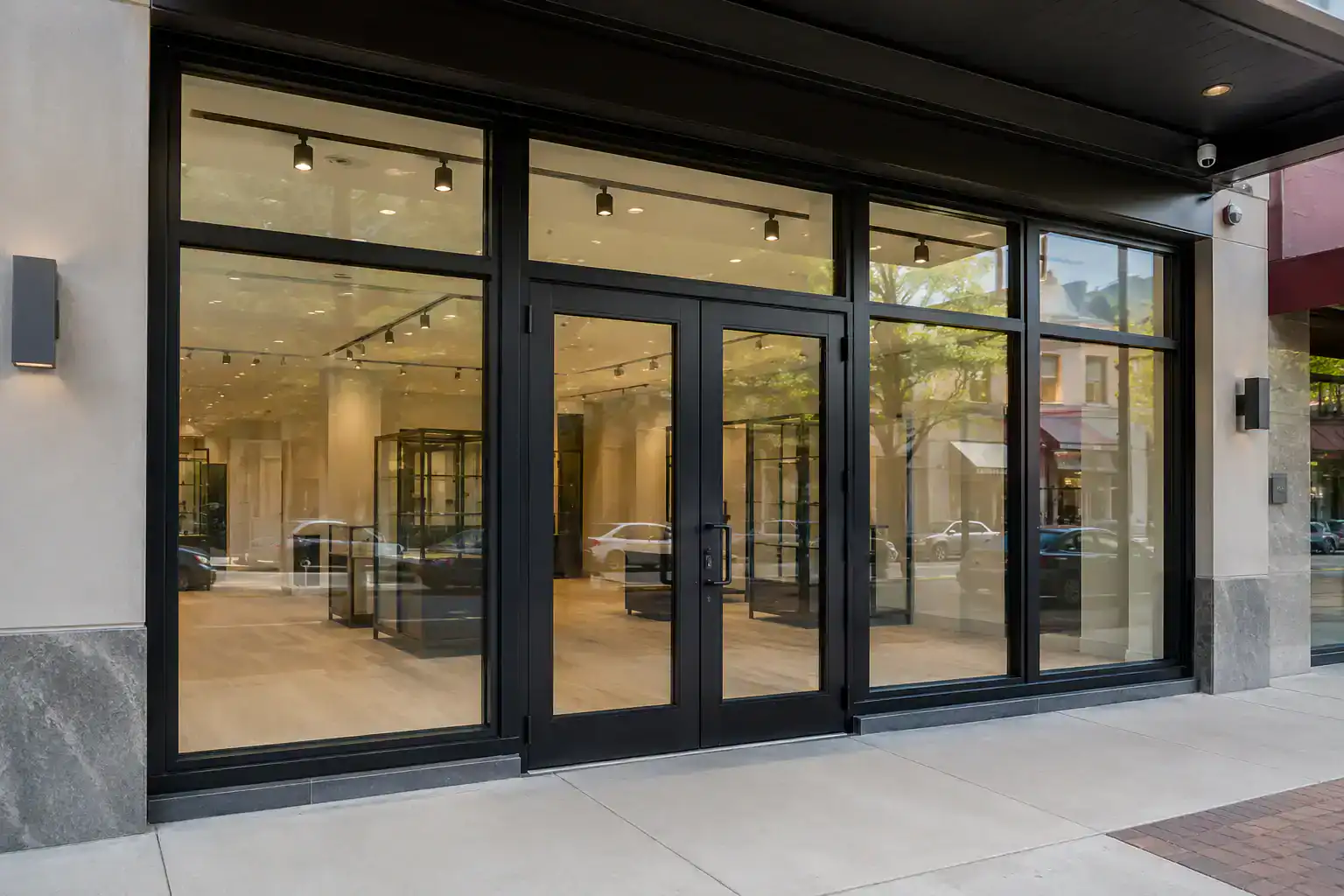
Florida’s commercial property owners have been specifying laminated, impact-rated glazing for decades. You already know what it means to have glass that holds under pressure — that stays in the frame when everything outside goes wrong. Bullet resistant glazing works from the same foundation. Laminated construction, system-level certification, rated performance.
For businesses along I-95 in Miami-Dade and Broward Counties, or along I-4 through the Orlando corridor, or in the high-traffic retail strips flanking I-75 through Tampa Bay, armed robbery and organized retail crime are documented, growing problems. Florida launched a first-of-its-kind statewide organized retail crime task force specifically because the scale of the problem demanded a coordinated response. A properly specified bullet resistant storefront or transaction window doesn’t just protect your staff in the moment. It changes the risk calculation for anyone casing your location.
For schools, government buildings, pharmacies, banks, and military-adjacent facilities across Florida’s 67 counties, the stakes are even higher. The right ballistic glazing system — UL 752 certified, PE-engineered, and built to last — means the people inside have a fighting chance when it matters most.
Action Bullet Resistant has been designing and manufacturing bullet resistant windows, doors, storefronts, curtain walls, and transaction windows for more than 45 years. We were founded in direct response to real armed crime — built out of necessity, not opportunity — and that origin still shapes how every system gets engineered today.
Co-owner Joseph Hayes holds a Professional Engineer (PE) license and LEED AP credential. That matters in Florida, where government procurement, military facility specifications, and licensed contractor ecosystems all expect PE-backed documentation. From MacDill Air Force Base in Tampa — home to CENTCOM and SOCOM — to federal courthouses in Miami-Dade to school districts spending Marjory Stoneman Douglas Act security grant funds, Florida’s institutional buyers need a manufacturer whose engineering credentials hold up under scrutiny. Our credentials do.
Every system we manufacture is built in West Islip, New York. Made in the USA — not assembled from imported components, not sourced through a distributor chain. That matters for Buy American compliance on federal and military projects throughout Florida, and it matters for lead time reliability when your project timeline can’t afford surprises.
The process starts with understanding what you’re actually protecting against. That means looking at your facility type, your location, and the realistic threat profile for your environment. A Broward County pharmacy handling controlled substances has a different risk profile than a federal courthouse in Jacksonville or a school in Orange County applying for Marjory Stoneman Douglas Act hardening funds. The right UL 752 protection level — whether that’s Level 1 for a retail transaction window or Level 8 for a military-adjacent facility — gets determined before a single measurement is taken.
From there, our engineering team develops a custom system. That means ballistic glazing, framing, hardware, and any transaction window components are all specified and manufactured together as a coordinated assembly — not sourced from separate vendors and hoped to be compatible. In Florida, commercial glazing installations require building permits and must comply with Florida Building Code Chapter 24. In Miami-Dade and Broward Counties, the High-Velocity Hurricane Zone requirements add another layer of documentation. Our PE-led team can support your licensed glazing contractor through the technical documentation process from start to finish.
Once the system ships, your local glazing contractor installs a ready-to-assemble system that was engineered to fit your opening and meet your certified protection level. There’s no guesswork at the job site. The system arrives with the specifications, certifications, and technical support needed to get it done right the first time.
Ready to get started?
We manufacture across the complete UL 752 spectrum — Levels 1 through 10 — which matters in a state where the security requirements run from an independent pharmacy on US-41 through Naples to a Special Operations Command facility at MacDill AFB in Tampa. Most manufacturers cap at Level 8. We cover the full range, so you’re not forced to find a second vendor when your project demands higher-level protection.
Our product line includes bullet resistant windows, bullet resistant doors, bullet resistant storefronts, bullet resistant curtain walls, bullet resistant transaction windows with stainless steel frames and deal tray systems, and fiberglass ballistic panels rated UL 752 Levels 1 through 6. For applications involving curved surfaces or complex architectural designs — common in Florida’s luxury coastal markets from Palm Beach to Sarasota to Miami’s Brickell corridor — LytArmor Flex provides a flexible ballistic panel that conforms where rigid panels simply cannot go, without sacrificing rated performance.
For Florida’s military installations and federal facilities, we offer systems rated for both ballistic and blast threats. That dual-protection capability is the baseline for AT/FP (Anti-Terrorism/Force Protection) specifications that govern facilities like NAS Jacksonville, NAS Pensacola, and Patrick Space Force Base on the Space Coast. Every system is made in the USA, fully tested, and delivered with the engineering documentation Florida’s licensed contractors and government procurement processes require.
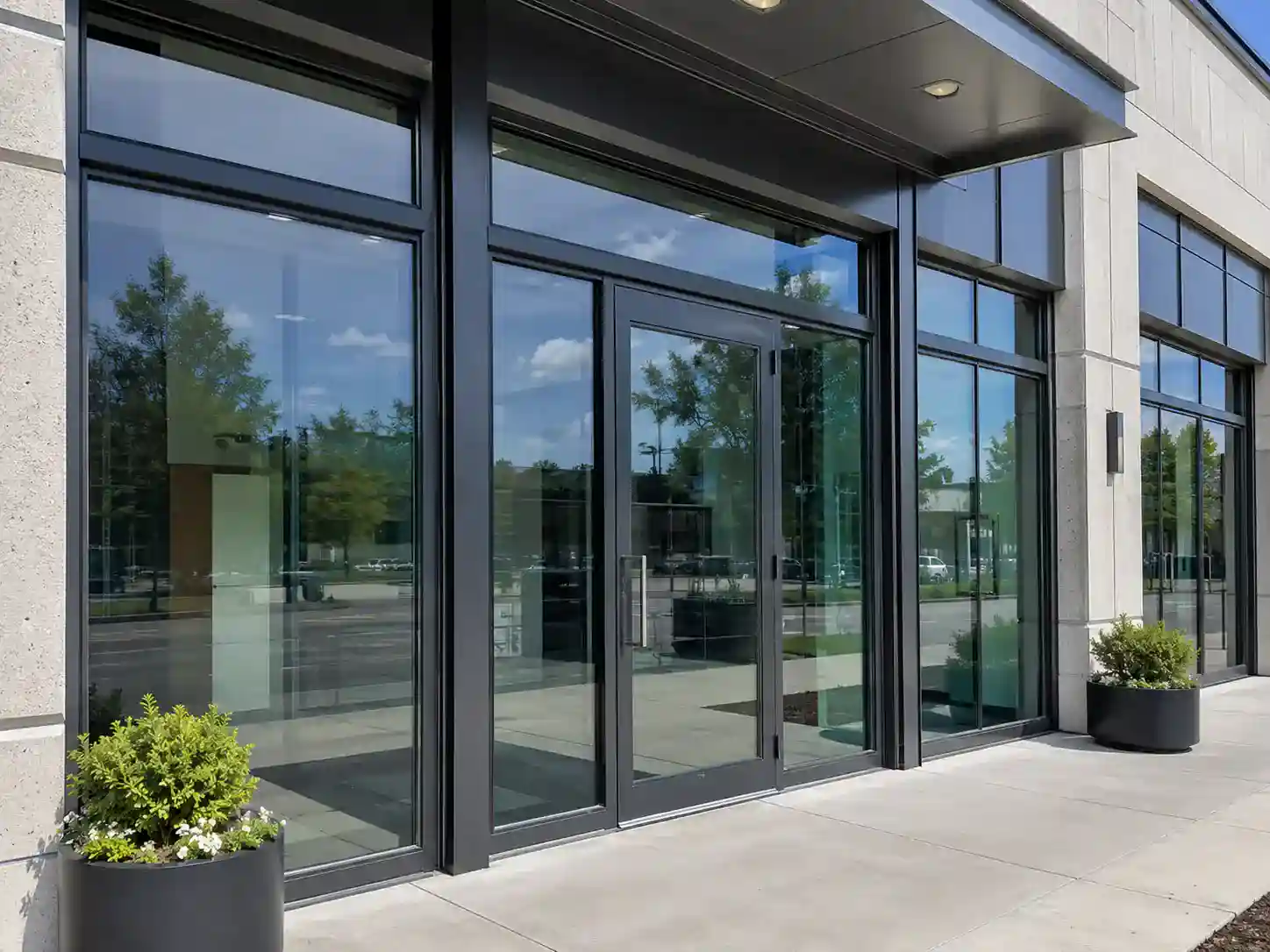
These are two separate certifications, and it’s one of the most common points of confusion for Florida buyers. Hurricane impact glass is tested and rated under Florida’s TAS 201 and TAS 202 standards — or Miami-Dade Notice of Acceptance requirements in the High-Velocity Hurricane Zone covering Miami-Dade and Broward Counties. Bullet resistant glass is tested and certified under UL 752 ballistic standards. A product can be laminated and hold up under impact in both cases, but the certifications are distinct and not interchangeable.
You cannot assume a hurricane-rated product provides ballistic protection, and vice versa. That said, the two product categories share significant construction overlap — both use laminated glass with interlayer systems designed to hold the glass in the frame after impact. If you’re specifying a new commercial build in a coastal Florida county and need both certifications, that’s a conversation worth having with a manufacturer who can engineer to both standards. Our PE-led engineering team can help you understand what documentation is required for your specific project location and use case, and whether a system can be developed to address both requirements.
For most pharmacies, pain management clinics, and healthcare-adjacent retail in Florida, UL 752 Levels 1 through 3 cover the realistic threat profile. Handguns account for approximately 80% of retail incidents according to FBI data, and Levels 1 through 3 are specifically designed to stop the handgun calibers most commonly used in armed robberies — 9mm, .357 Magnum, and .44 Magnum. For a transaction counter or pass-through window application, a Level 1 or Level 2 system is often the right specification for the actual risk.
Florida’s pharmacy and pain clinic market is one of the most heavily targeted in the country, driven by the state’s large retiree population and the high density of facilities handling controlled substances. The goal of a bullet resistant transaction window in this environment isn’t to stop military-grade rifle fire — it’s to stop the handgun threat that’s statistically most likely to walk through your door. Right-sizing to the actual threat level is both more cost-effective and structurally appropriate. Our engineering team can walk through your specific counter configuration and recommend the right system for your location.
In Florida, commercial glazing installations require building permits and must comply with Florida Building Code Chapter 24, which governs glass and glazing. This means your bullet resistant window, door, or storefront system needs to be permitted and inspected before it’s considered code-compliant. The permit is pulled by your licensed glazing contractor — in Florida, that typically requires a licensed general contractor (FL CGC) or specialty glazing license. Our certification documentation, including UL 752 test reports and product specifications, is part of what your contractor submits to support the permit application.
In Miami-Dade and Broward Counties, the High-Velocity Hurricane Zone requirements add a layer of documentation beyond what’s required elsewhere in the state. For federal facilities — courthouses, VA medical centers, military installations — the GSA P100 Facilities Standard and AT/FP specifications apply on top of state building code requirements. Our PE-led engineering team provides the technical documentation, drawings, and specifications that Florida’s licensed contractors need to move through the permit process efficiently. The system arrives ready to install, with the paperwork to back it up.
Yes — and many Florida school districts already are. The Marjory Stoneman Douglas High School Public Safety Act allocated over $98 million in grants specifically for improving and hardening the physical security of school buildings across Florida. Physical hardening measures — including bullet resistant windows and doors — are among the eligible expenditures under the program. To qualify, the products specified must meet documented performance standards, which is where UL 752 certification becomes critical. Grant-funded purchases need to be defensible, and a UL 752-certified system from a licensed PE-led manufacturer provides exactly that documentation trail.
Florida has 67 county school districts, and security upgrade projects funded through these grants typically happen during summer months when schools are not in session — creating a concentrated installation window. If your district is in the planning phase for a security hardening project, the time to get specifications and engineering documentation in order is before the summer installation window opens, not during it. We can provide the technical specifications, UL 752 certification documentation, and engineering support your district needs to move through the grant compliance and permitting process with confidence.
Florida’s climate is genuinely harder on glazing products than most of the country. The combination of intense UV exposure, high humidity, salt air in coastal counties from Jacksonville Beach down through the Florida Keys, and dramatic temperature swings between air-conditioned interiors and outdoor heat can accelerate yellowing, crazing, and delamination in lower-quality ballistic glazing materials.
Properly manufactured bullet resistant glazing — with UV-resistant coatings and quality interlayer materials — can last 15 to 20 years or more before any meaningful degradation. The key word is “properly manufactured.” Polycarbonate and acrylic ballistic materials without UV stabilization will yellow and craze faster in Florida’s sun than anywhere else in the country. We engineer systems built to perform in the environments where they’re installed, and our team can speak specifically to material selection for Florida’s coastal and high-UV conditions. If you’re replacing an existing system that’s yellowed or crazed, that’s a sign it’s time — degraded ballistic glazing no longer provides rated protection.
Bullet resistant and blast resistant are two distinct performance categories, and Florida’s military installations — MacDill AFB, Eglin AFB, NAS Pensacola, NAS Jacksonville, Patrick Space Force Base, and others — typically require both. Bullet resistant glass is rated under UL 752 and is tested against specific ballistic threats: handgun calibers at lower levels, rifle calibers at higher levels. Blast resistant glass is engineered to withstand the pressure wave and fragmentation generated by an explosion. The failure modes are different, the testing protocols are different, and a product certified for one is not automatically certified for the other.
For facilities subject to AT/FP (Anti-Terrorism/Force Protection) specifications — which govern most federal and military construction in Florida — the glazing system needs to address both threat categories. We manufacture systems rated for both ballistic and blast threats, which is a capability that most competitors in this space do not offer. That dual-protection engineering is not a marketing add-on — it’s a specification requirement for the type of institutional and government work that represents a significant portion of Florida’s security glazing demand. If your project is federal or military-adjacent, this is one of the first questions you should be asking any manufacturer you’re evaluating.
Useful Links
Other Services we provide in Florida