Hear from Our Customers
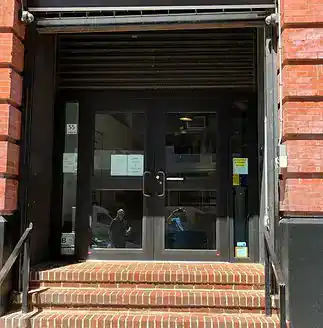
Boston saw a 55% increase in shoplifting reports between the first half of 2019 and the same period in 2024. Suffolk County alone went from roughly 900 shoplifting incidents in 2019 to more than 4,300 in 2024. The Boston Police Department launched a dedicated Safe Shopping Initiative in 2024, and shoplifting arrests rose 261% in 2025 compared to the five-year average. If you own or manage a retail space, pharmacy, credit union, or commercial building anywhere along the I-90 corridor, Route 9, or the commercial strips of Greater Boston, this isn’t a hypothetical problem. It’s a weekly reality.
What makes Massachusetts particularly demanding from a security glazing standpoint isn’t just the crime environment — it’s the buildings themselves. Much of the commercial stock in Boston’s Back Bay, Worcester’s downtown, Salem’s historic district, and Springfield’s commercial corridors dates back 80 to 150 years. Non-standard window openings, thick masonry walls, and historic facade requirements mean that off-the-shelf security products rarely fit and almost never get approved by local design review boards.
We engineer systems that are custom-fabricated to your exact opening, built to meet both UL 752 ballistic performance standards and Massachusetts’s 780 CMR building code, and designed to look like they belong in a Massachusetts building. That’s the difference between a system that gets installed and one that actually works — architecturally, structurally, and legally — in the buildings we see across the Commonwealth.
Action Bullet Resistant has been designing and manufacturing bullet resistant glass systems for more than 45 years — long before most of the local glaziers and film installers you’ll find in a Massachusetts search result were in business. We were founded in direct response to real-world crime against gas station workers, which means our entire operation was built around understanding what actual threat exposure looks like, not just what a product brochure says.
Today, Action Bullet Resistant is co-led by Joseph Hayes, PE, LEED AP — a licensed Professional Engineer and LEED-accredited professional. That matters in Massachusetts, where commercial glazing projects increasingly have to satisfy overlapping requirements: 780 CMR Chapter 24, UL 752 ballistic certification, ISC standards for federal facilities in Boston’s Seaport District and Government Center, and the 2025 Massachusetts Commercial Stretch Code for energy performance. Every system we deliver comes with the architectural drawings, 3-part specifications, and technical data sheets that Massachusetts architects, contractors, and building officials actually need.
We manufacture at our facility in West Islip, New York — approximately 220 miles from Boston. Same regional climate, same building code framework, and shorter lead times than manufacturers based in the Midwest or South.
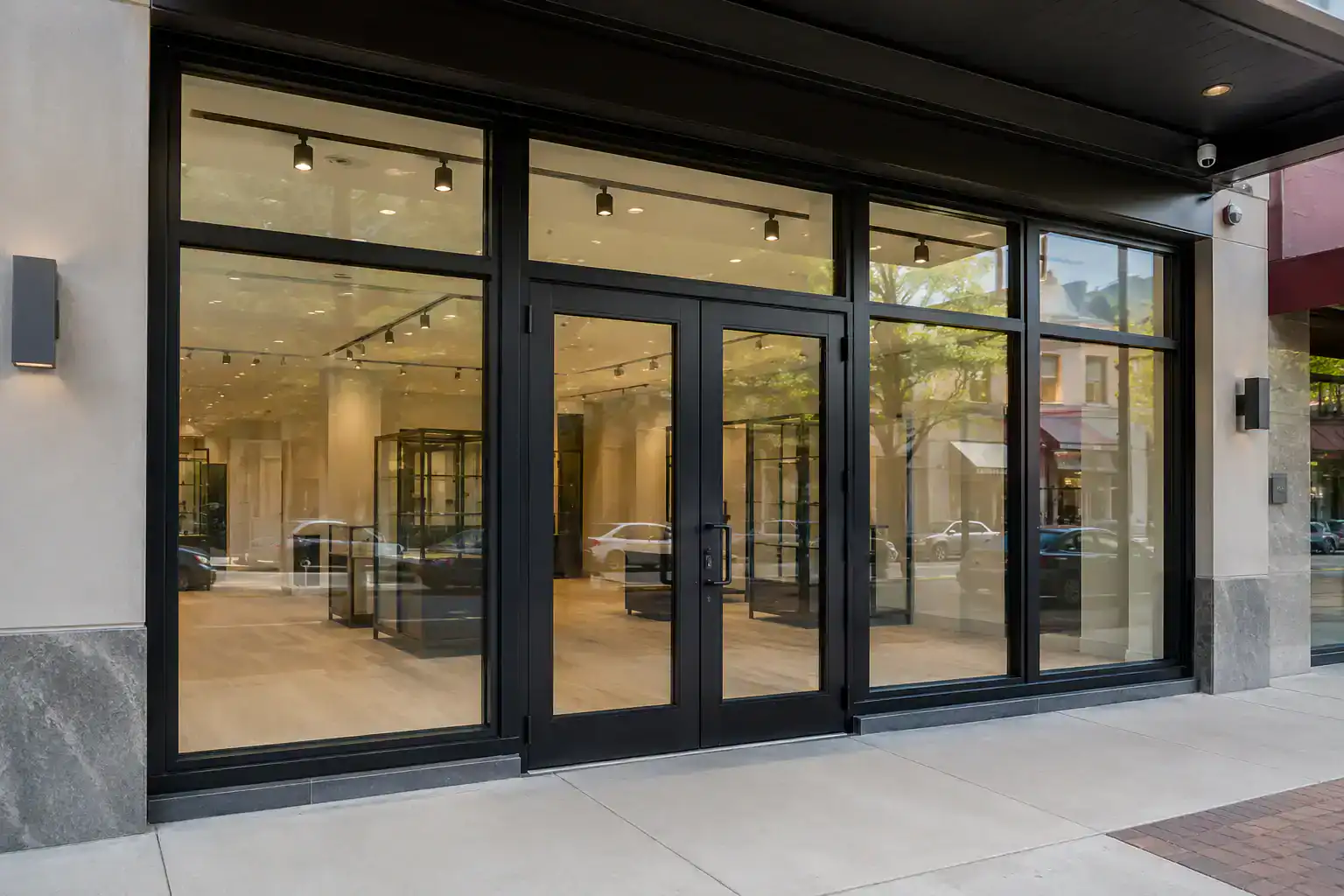
It starts with understanding your threat level and your building. For a pharmacy in Lowell or a credit union branch in Worcester, UL 752 Level 1 through 3 systems address the handgun threats that account for roughly 80% of retail incidents. For a federal building in Boston’s Rose Kennedy Greenway corridor or a life sciences campus lobby in Cambridge, you may be looking at Level 5 through 8 — or systems that carry both ballistic and blast resistance ratings. Getting the specification right from the start saves time, money, and the headache of a failed inspection.
Once the threat level and application are confirmed, we engineer the system to your exact opening dimensions. This step is where Massachusetts projects often diverge from simpler markets. Older commercial buildings throughout the Commonwealth — particularly in historic districts like Back Bay, Beacon Hill, or downtown Salem — have non-standard window dimensions, masonry surrounds, and in some cases historic commission design review requirements. Our custom fabrication process accounts for all of it: the glazing, the framing, the transaction window or pass-through if needed, and the hardware. Everything is engineered as a complete system, not assembled from parts sourced from multiple vendors.
In Massachusetts, commercial glazing installations require a building permit from the local building department, and structural modifications to framing or walls require licensed contractor involvement under state law. Our documentation package — architectural drawings, 3-part specs, and technical data sheets — is built to support that permitting process directly, so your contractor isn’t starting from scratch.
Ready to get started?
We manufacture the complete range of bullet resistant glass systems — windows, doors, storefronts, curtain walls, transaction windows, and ballistic wall panels — across UL 752 Levels 1 through 10. That full-spectrum capability matters in Massachusetts, where the buyer profile spans convenience store owners on Route 1 in Saugus all the way to federal courthouse facility managers in downtown Boston specifying under GSA P100 standards.
For retail and commercial applications — the pharmacies, gas stations, and small businesses that make up the bulk of Massachusetts’s commercial corridors along I-93, I-95, and I-495 — Level 1 through 3 systems address the most common threat scenarios. For institutional buyers: universities, hospital systems, life sciences campuses in Kendall Square or Waltham, and government agencies throughout the state, our higher-level systems and dual bullet-and-blast-rated products provide the documentation and performance that formal procurement processes require.
Massachusetts’s coastal environments — the North Shore, South Shore, Cape Cod, and Boston Harbor — create additional material considerations. Salt air accelerates corrosion in standard steel framing. Our aluminum-framed storefront systems and stainless steel transaction windows are built to hold up in those conditions without the maintenance burden that comes with standard steel. If your building has curved or angled glazing, LytArmor Flex — our proprietary flexible ballistic panel — can conform to those geometries where rigid panels simply cannot go.
Yes, and Massachusetts has a layered code environment that’s worth understanding before you specify anything. Commercial glazing in Massachusetts falls under 780 CMR, the Massachusetts State Building Code, currently in its 10th edition. Chapter 24 governs glass and glazing, and Section 408.7 specifically addresses security glazing requirements for institutional and correctional occupancies. Beyond the state code, federal buildings in Massachusetts — including those in Boston’s Government Center and Seaport District — are subject to Interagency Security Committee standards and GSA P100 facility requirements, which mandate bullet-resistant glazing in applicable occupancy categories.
There’s also an energy performance layer that catches a lot of buyers off guard. Massachusetts’s 2025 Commercial Stretch Code includes updated requirements for commercial glazing thermal performance. That means your ballistic glazing system has to satisfy both UL 752 ballistic performance standards and Massachusetts energy code requirements simultaneously. Working with a manufacturer whose engineering team holds a Professional Engineer license and LEED AP credential — as Action Bullet Resistant does — means those dual requirements get addressed in the specification from the start, not discovered during a building department review.
The right level depends on your specific threat environment, not a general rule of thumb. FBI data shows that handguns account for roughly 80% of retail incidents, which means most convenience stores, pharmacies, gas stations, and retail businesses along Massachusetts commercial corridors — whether that’s Route 9 in Natick, the commercial strips of Lowell, or Downtown Crossing in Boston — are well-served by UL 752 Level 1 through 3 systems. Level 1 is tested against 9mm rounds; Level 3 handles .44 Magnum. For most retail and small commercial applications, that range covers the realistic threat.
If you’re specifying for a bank branch, a credit union, or a financial services office, Level 3 through 5 is the typical starting point. For government buildings, law enforcement facilities, or critical infrastructure in Massachusetts, the specification usually begins at Level 5 and can go higher depending on the threat assessment. We manufacture systems across all 10 UL 752 levels, so the answer to “what do I need?” is always based on your actual situation — not on what happens to be in stock.
This is one of the most common concerns for Massachusetts property owners, and it’s a legitimate one. Massachusetts has more National Register of Historic Places listings than almost any other state, and commercial buildings in districts like Boston’s Back Bay, Beacon Hill, Salem’s historic commercial district, and downtown Newburyport are subject to design review by local historic commissions and, in some cases, the Massachusetts Historical Commission. Standard off-the-shelf security products — especially retrofit film overlays and generic framing systems — often fail design review because they visibly alter the character of historic facades.
The answer is custom fabrication and architectural integration. We engineer every system to match the exact dimensions and visual character of the existing opening. That means the glazing profile, the frame finish, and the overall appearance can be designed to satisfy historic commission requirements while still delivering certified UL 752 ballistic protection. It’s not a simple process, but it’s entirely achievable — and it starts with having the right documentation (architectural drawings, material specifications, finish options) to present to the reviewing authority before installation begins.
It’s a real factor, and it’s one that gets overlooked when buyers focus only on ballistic performance ratings. Massachusetts’s coastal environments — the North Shore from Gloucester down through Salem and Peabody, the South Shore through Quincy and Plymouth, Boston Harbor, and Cape Cod — expose building exteriors to persistent salt air. Salt air accelerates corrosion in standard steel framing components, which means a bullet-resistant system with standard steel framing can develop structural and aesthetic problems well before its ballistic glazing reaches the end of its useful life.
Our aluminum-framed storefront systems and stainless steel transaction windows are the appropriate specification for coastal Massachusetts installations. Aluminum doesn’t corrode in salt air the way standard steel does, and stainless steel transaction windows hold up in high-humidity coastal environments without the maintenance burden. If you’re specifying for a building within a few miles of the Massachusetts coastline — whether that’s a bank branch in Gloucester, a pharmacy in Hyannis, or a retail space in South Boston near the waterfront — the framing material selection is just as important as the glazing level.
Yes — this is an important point that sometimes surprises buyers. Once bullet resistant glass has taken an impact, it no longer has structural integrity, even if it appears intact from the outside. The internal lamination and polycarbonate layers that absorb and distribute the ballistic energy are compromised at the point of impact, which means the system cannot be relied upon to perform to its rated level against a subsequent threat. Replacement after an impact event is not optional — it’s a safety requirement.
Beyond impact events, there are a few other conditions that typically prompt replacement. Acrylic and polycarbonate materials can yellow or develop surface crazing over time, particularly in environments with significant UV exposure — which is relevant for Massachusetts storefronts facing south or west along sun-exposed commercial corridors. If your system is approaching 20 years of age, or if you’re renovating your facility and the existing glazing no longer matches the updated architecture, those are also reasonable triggers for replacement. We can help you assess whether an existing system still meets your current threat level and code requirements, or whether a replacement and upgrade makes more sense.
There are active funding mechanisms in Massachusetts specifically designed to support physical security upgrades in schools and public facilities. The Massachusetts Department of Elementary and Secondary Education administers Safe and Supportive Schools Grant Programs under Fund Codes 335 and 337, which are structured to help school districts fund facilities improvements aligned with school safety priorities. Bullet-resistant glazing at entry points, administrative office windows, and main reception areas falls within the scope of physical security improvements these programs are designed to support.
For municipal buildings and state facilities, capital improvement budgets and federal Homeland Security grant programs have historically funded security glazing upgrades. The legislative momentum around school security in Massachusetts — including Bill H.3881, the Massachusetts version of Alyssa’s Law introduced in April 2023 — signals continued state-level investment in physical security infrastructure for public buildings. If you’re a facilities director, school business manager, or municipal administrator in Massachusetts exploring ballistic glazing for a public building, it’s worth working through your procurement office to identify applicable funding before assuming the full cost falls on your operating budget. We can provide the technical documentation — specifications, product data sheets, and architectural drawings — that grant applications and formal procurement processes typically require.
Useful Links
Other Services we provide in Massachusetts