Hear from Our Customers
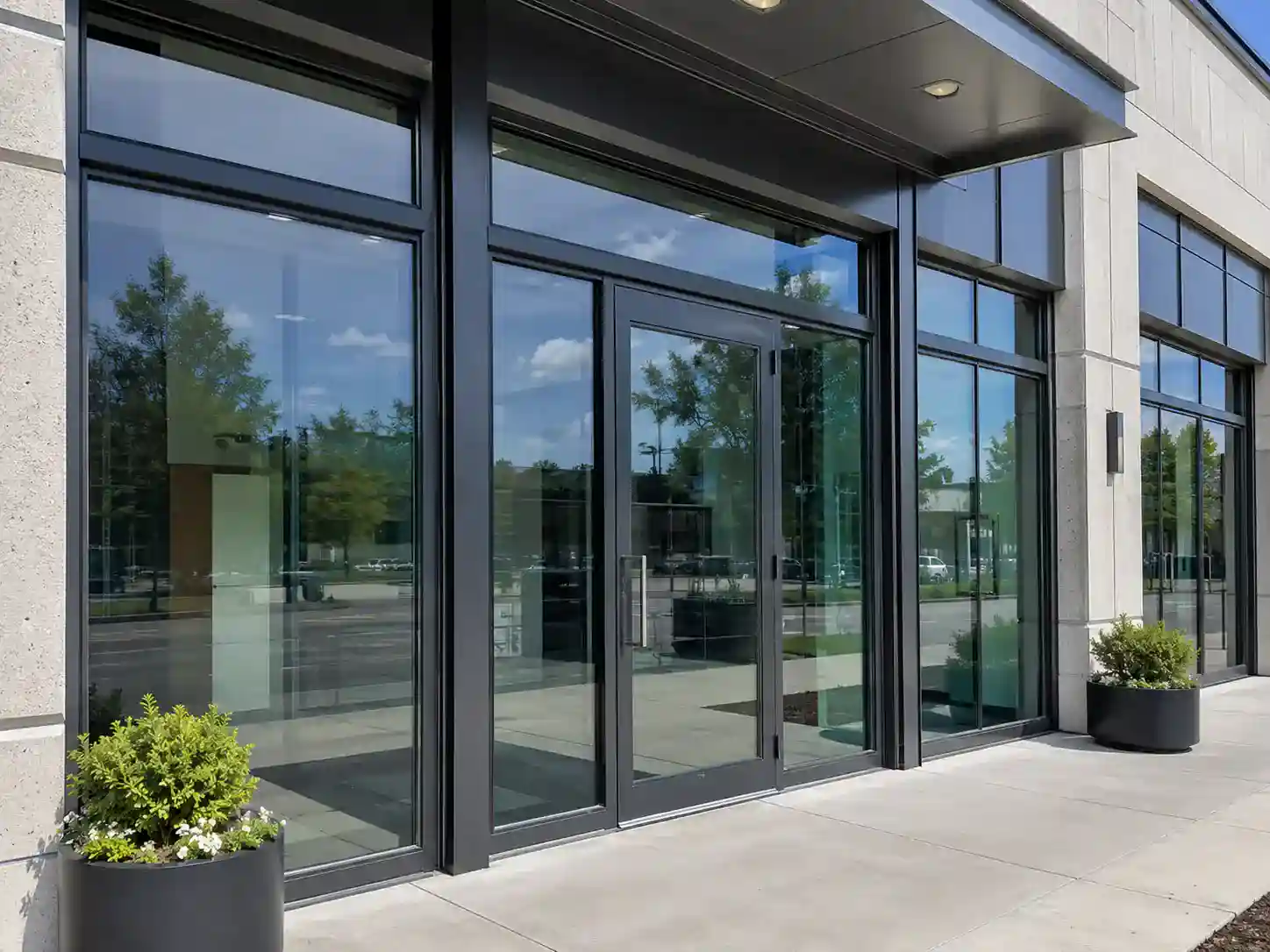
When your glazing system is properly engineered and UL 752-certified, a lot of the uncertainty around security goes away. You’re not guessing whether the glass will hold. You’re not hoping the framing is adequate. You know exactly what threat level you’re protected against, because it’s been independently tested — not just claimed on a spec sheet.
For Virginia’s government and defense sector, that certainty matters at a procurement level. Facilities along the Dulles Technology Corridor, near the Pentagon in Arlington, and throughout Northern Virginia’s cleared contractor campuses operate under GSA P100 requirements and federal security standards that demand documented, third-party-tested ballistic glazing. The right system doesn’t just protect people — it satisfies plan reviewers, contracting officers, and the licensed engineers of record who sign off on these projects.
For Virginia’s retailers and commercial property owners, the outcome is more immediate. Richmond’s commercial robberies increased sharply in 2025. Virginia enacted organized retail crime legislation in 2023 specifically because of documented smash-and-grab incidents at retail locations across the state. A properly installed bullet resistant storefront or transaction window system changes the math for anyone targeting your business. It doesn’t just deter — it physically stops the threat that Virginia’s own legislature acknowledged is real and escalating.
Action Bullet Resistant has been designing and manufacturing bullet resistant systems for more than 45 years. We were founded in direct response to real-world crime — built from necessity, not opportunity — and that same engineering-first approach drives every system that leaves our West Islip, New York facility today.
What sets us apart from the local glazing contractors serving Virginia is the depth of manufacturing accountability behind our product. Co-owner Joseph Hayes holds a Professional Engineer license and a LEED AP credential. When a government project in Arlington or a school division in Henrico County needs a ballistic glazing system that can survive plan review, that PE credential matters. It means the system was reviewed and engineered by a licensed professional — not assembled from components sourced from multiple vendors and handed off to an installer.
Every system we manufacture is made in the USA, which satisfies Buy American Act compliance requirements that are routine on Virginia’s federal and defense procurement projects. That’s not a marketing point — it’s a procurement requirement for a significant portion of Virginia’s institutional market, and we meet it consistently.
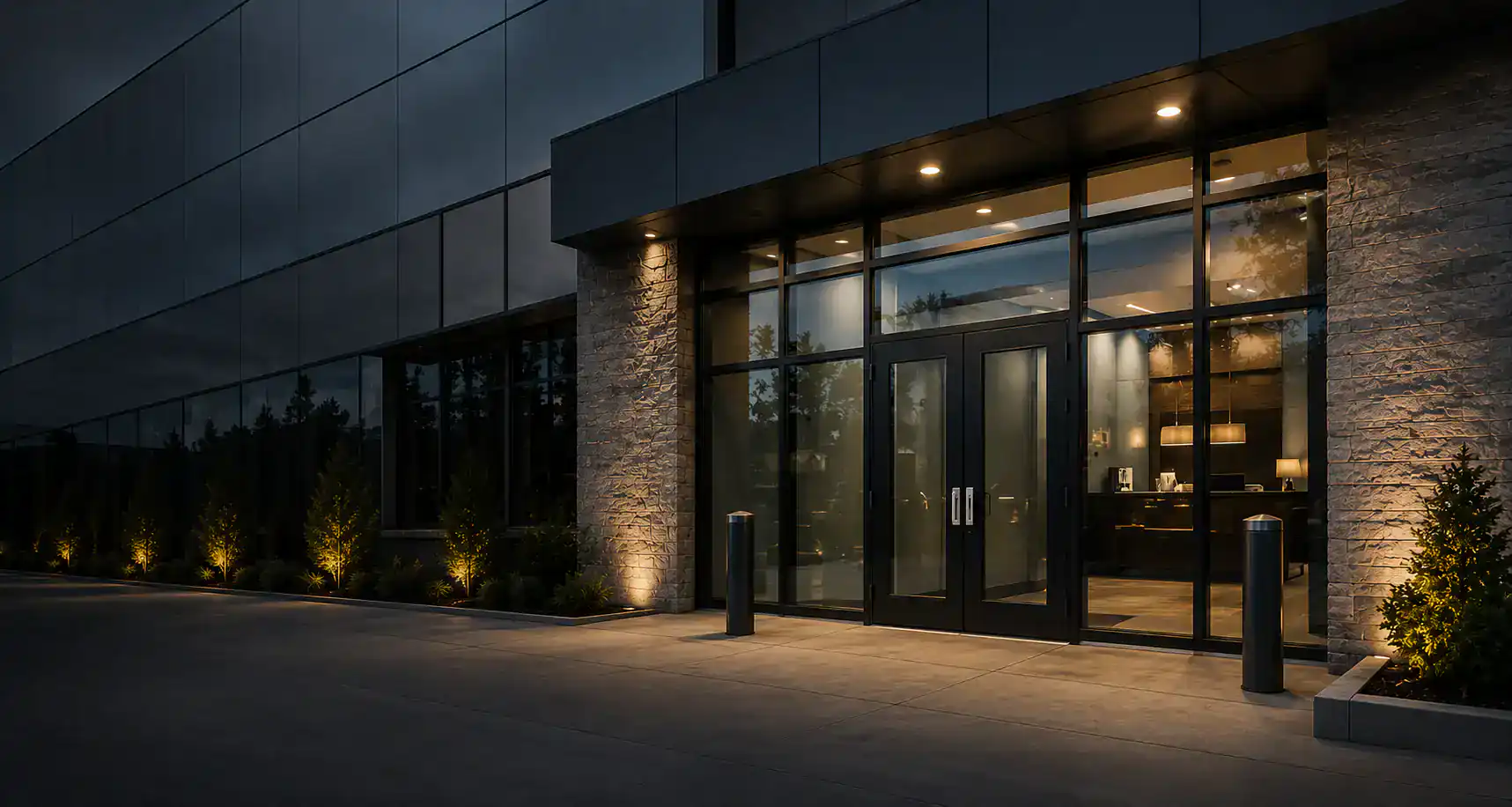
The process starts with understanding what you actually need. That means looking at the threat environment — what type of weapons are most likely, what the building’s traffic patterns look like, and what the architectural requirements are. For a government facility near the Pentagon, that conversation looks very different than it does for a pharmacy in Richmond or a credit union in Virginia Beach. Our engineering team works through those specifics before anything is manufactured.
Once the threat level and system configuration are established, manufacturing begins at our West Islip facility. Every component — the ballistic glazing, the aluminum or steel framing, the transaction windows, the hardware — is produced as an integrated system. This matters because standard frames are not rated to support the weight of ballistic glass or to stop bullets. A system where the glazing and framing aren’t engineered together creates gaps that defeat the purpose of the investment.
For Virginia projects, the permitting process runs through local building departments. Virginia’s 95 counties and 38 independent cities each enforce the Virginia Uniform Statewide Building Code through their own inspection offices. For federal facilities, the GSA P100 Facilities Standard adds a layer above the USBC. We provide the technical documentation — 3-part CSI specifications, technical data sheets, and PE-backed engineering drawings — required to move through those review processes without delays. The goal is a system that installs cleanly, passes inspection, and performs exactly as rated from day one.
Ready to get started?
We manufacture across the full range of UL 752 Levels 1 through 10. Most applications in Virginia’s commercial sector — convenience stores, pharmacies, check-cashing facilities, retail storefronts — are well-served by Levels 1 through 3, which are rated for handgun threats. Handguns account for roughly 80% of retail incidents nationally, and Virginia’s documented organized retail crime pattern follows that same profile. For financial institutions, government offices, and law enforcement facilities, the appropriate level steps up from there, and our engineering team helps you right-size the specification rather than default to the highest level available.
Our product line covers what Virginia’s market actually demands. Bullet resistant windows — fixed and operable — for interior and exterior applications. Bullet resistant doors in aluminum and steel configurations, with both bullet and blast resistant ratings available for Virginia’s military-adjacent facilities and government buildings. Bullet resistant storefronts for retail and commercial applications. Stainless steel transaction windows with pass-through and deal tray systems for banks, pharmacies, and government service counters. Fiberglass ballistic panels rated to UL 752 Levels 1 through 6. And LytArmor Flex — our proprietary flexible ballistic panel — for architecturally complex projects where rigid panels can’t conform to curved surfaces or design-forward environments like the corporate campuses in Tysons, Reston, or Potomac Yard.
Virginia’s correctional facilities are governed by Administrative Code section 6VAC15-81-970, which specifically requires that security glazing account for ballistic attack. Our systems are engineered to meet that standard with the documentation to prove it.
There isn’t a single universal answer, because the required protection level depends on the specific threat assessment for each facility. For federal buildings in Virginia — including GSA-managed properties and DoD facilities in Arlington and throughout Northern Virginia — the GSA P100 Facilities Standard governs the minimum requirements for bullet-resistant glazing in designated security zones. That standard typically points toward UL 752 Levels 4 through 8 for high-traffic government access points, though the specific level is determined through a formal security assessment.
For state and local government facilities, Virginia’s building code doesn’t mandate a specific UL 752 level for general office buildings — but correctional facilities are a different matter. Virginia Administrative Code section 6VAC15-81-970 requires that security glazing in correctional facilities explicitly account for ballistic attack. Our engineering team can work through the threat assessment with your architect or project manager and provide the specifications and documentation needed for plan review — whether that’s through a local building department in Fairfax County or a federal contracting officer at a cleared facility in Reston.
Virginia’s school security equipment grant program, administered by the Virginia Department of Education, has distributed $12 million annually in 2023, 2024, and 2025 — reaching between 472 and 483 schools per grant cycle. A separate one-time FY2024 School Safety and Security Grant added another $18.5 million in state and federal funding. These grants are specifically designated for security equipment, and bullet resistant windows and glazing systems qualify as eligible expenditures when they meet the security standards required under the grant criteria.
The practical challenge for school divisions isn’t usually funding availability — it’s documentation. Public procurement in Virginia requires that specified products meet verifiable standards, and the purchasing process involves plan review by the local building department. We provide the full technical package that school division facilities teams and their architects need: UL 752 certification documentation, 3-part CSI specifications, technical data sheets, and PE-backed engineering drawings. If your school division is working through a grant-funded security upgrade, having a manufacturer who can support the specification and procurement process is as important as the product itself.
Virginia’s climate creates real performance considerations that don’t come up in more temperate states. Northern Virginia and the Piedmont experience significant temperature swings — from sub-freezing winter temperatures to 90-degree-plus summers — and that thermal cycling puts stress on glazing assemblies over time. If the framing system isn’t engineered to accommodate that expansion and contraction, you can develop seal failures, frame distortion, and compromised ballistic performance long before the glass itself reaches the end of its useful life.
Hampton Roads adds a different layer. Coastal properties in Virginia Beach, Norfolk, and Chesapeake face hurricane-force wind and debris threats, which means glazing systems in that region need to address both ballistic and impact resistance. Our storefront systems are rated for bullet, blast, and impact resistance — a combination that’s particularly relevant for coastal Virginia commercial properties. Virginia’s high summer humidity is also a factor for acrylic and polycarbonate ballistic materials; without proper UV-resistant coatings, those materials can yellow or craze over time. Every system we manufacture accounts for these environmental conditions in the material selection and framing design.
Bullet resistant glass is engineered to stop a projectile from penetrating the glazing — it’s rated by UL 752 levels based on the type of ammunition, velocity, and number of shots the material can withstand without allowing penetration. Blast resistant glass is engineered for a different threat: the pressure wave, heat, and fragmentation generated by an explosion. A system that stops a bullet isn’t necessarily rated to handle a blast, and vice versa.
For most of Virginia’s commercial market — retailers, banks, pharmacies — bullet resistance alone is the relevant specification. But for Virginia’s military installations, defense contractor facilities near the Pentagon, and federal buildings throughout Northern Virginia and Hampton Roads, the threat environment includes both ballistic and explosive threats. We manufacture systems that carry dual ratings — bullet and blast resistant — engineered as an integrated system rather than a ballistic glazing product with a blast film added afterward. If your facility requires both ratings, that needs to be established at the specification stage, not retrofitted after installation. Our engineering team can walk through the specific requirements for your facility type and location.
A properly installed bullet resistant glazing system should last 15 to 20 years before yellowing or optical degradation becomes a concern — assuming it hasn’t been impacted by a ballistic event. That’s the standard lifespan for acrylic and polycarbonate ballistic materials with appropriate UV-resistant coatings, and Virginia’s climate makes those coatings more important than in milder states. The combination of intense summer UV exposure and high humidity accelerates degradation in materials that aren’t properly protected.
The more important replacement trigger is impact. If your bullet resistant glass is actually shot, it needs to be replaced — the structural integrity of the material is compromised by the impact even if the bullet didn’t penetrate. The glass may look intact from a distance, but it will no longer perform to its rated level against a subsequent threat. Other reasons to consider replacement include visible crazing or yellowing that affects visibility, facility renovation that changes the security configuration, or an upgrade to a higher UL 752 protection level based on a revised threat assessment. We can help evaluate whether your existing system still meets your current security requirements or whether a replacement is warranted.
There are local glazing contractors in Virginia who install bullet resistant glass — companies serving the Northern Virginia, Richmond, and Hampton Roads markets. What most of them don’t do is manufacture the systems they install. They source ballistic glazing from out-of-state manufacturers and assemble the components on-site, which introduces a critical variable: the framing system. Standard commercial frames are not adequate to support the weight of ballistic glass or to stop bullets — the glazing and the framing need to be engineered together as a rated system. When those components come from different sources, the responsibility for system-level performance becomes unclear.
Working directly with us means the glazing, framing, transaction windows, and hardware are all engineered and produced as an integrated system. There’s a single point of accountability for the ballistic rating, the engineering documentation, and the technical support your architect or contractor needs during installation. For Virginia’s government and institutional projects — where plan reviewers and contracting officers scrutinize specifications — that documentation chain matters as much as the product itself. We ship throughout Virginia and provide the full technical package that local contractors and project teams need to complete the installation correctly.
Useful Links
Other Services we provide in Virginia