Hear from Our Customers
When your glazing is rated, tested, and built by engineers who understand the threat environment you’re actually operating in, the difference isn’t subtle. Staff move through the day without that low-level tension that comes from knowing the barrier in front of them hasn’t been verified by anyone. That shift matters — and it’s something a security film or an unrated panel can’t give you.
Maryland’s security landscape is unlike any other state in the Mid-Atlantic. You have 20 military installations, federal agency headquarters scattered from Bethesda to White Oak to Greenbelt, and a banking sector that the FBI specifically flagged in July 2024 for an alarming rise in armed robbery activity across multiple counties. The right bullet resistant glass system doesn’t just protect people; it closes the gap between your current setup and what the actual risk demands.
For Maryland’s older commercial building stock — particularly in Baltimore City and parts of Prince George’s County, where standard storefront glazing is still common — retrofitting with a properly rated ballistic system means you’re not starting from scratch architecturally. We engineer systems to integrate with existing structures, so the upgrade looks intentional, not bolted on.
Action Bullet Resistant has been manufacturing bullet resistant windows, doors, storefronts, and glazing systems for more than 45 years. We were built in direct response to real armed crime — not as a market opportunity, but as a practical answer to a real problem. That origin still shapes how every system is designed and built today.
Co-owner Joseph Hayes holds a Professional Engineer license and LEED AP credential. For Maryland’s government architects, federal facility managers, and specifying engineers working on projects from the Montgomery County suburbs to the Baltimore-Washington corridor, that matters. You’re not getting a reseller’s catalog — you’re getting a manufacturer whose engineering team can produce the 3-part specs, CAD drawings, and UL 752 certifications that Maryland’s institutional and federal procurement process requires.
Every system is manufactured at our facility in West Islip, New York — roughly 200 to 250 miles from Baltimore, well within the Northeast corridor Maryland’s commercial market relies on. Made in the USA isn’t a tagline here; for federal procurement under Buy American provisions, it’s a requirement we already satisfy.
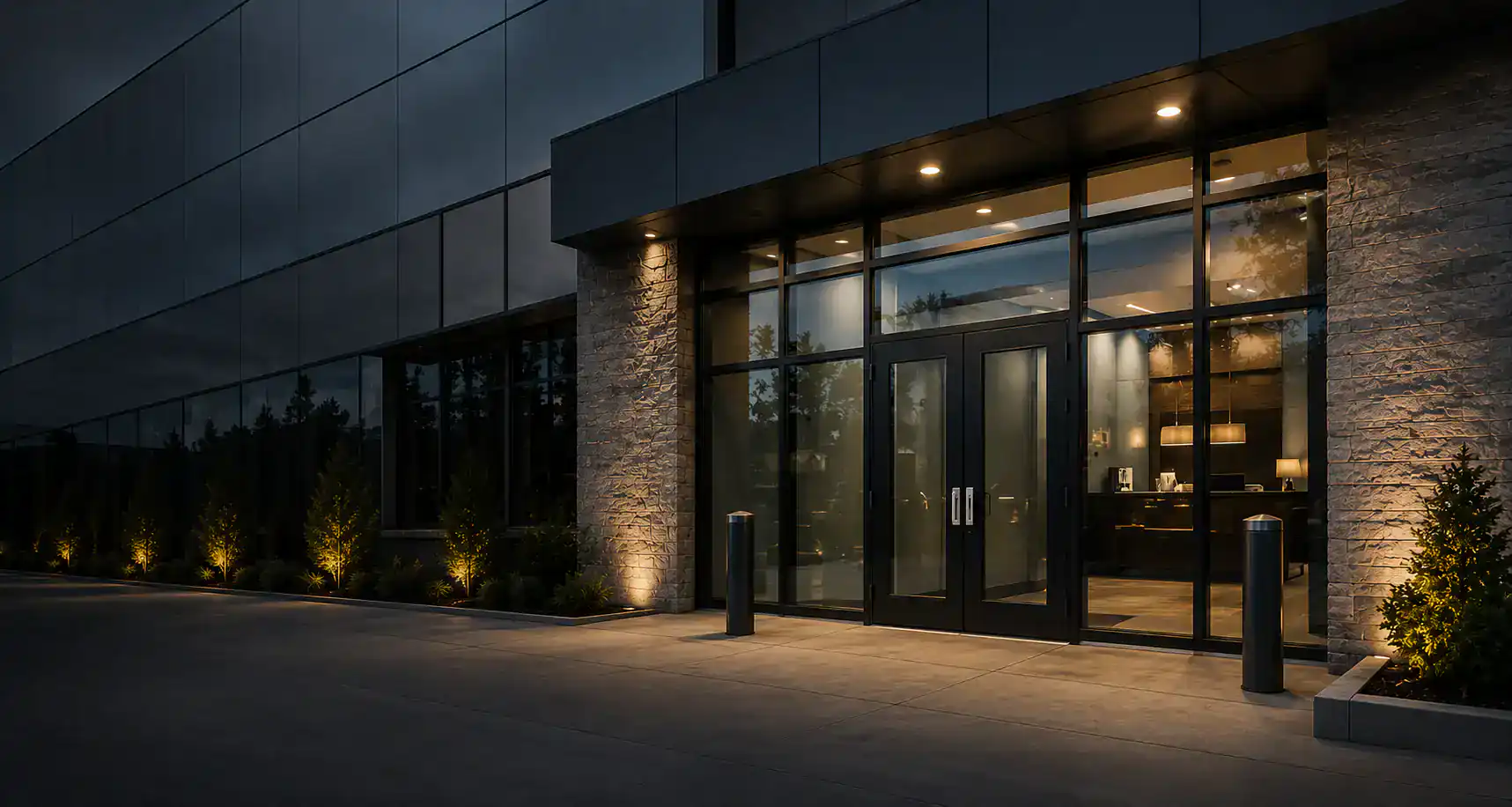
The process starts with understanding your threat environment and your building. For a bank branch in Howard County responding to the FBI’s jugging robbery advisory, the right starting point is different than a school in Anne Arundel County accessing Maryland’s School Safety Grant Program, or a federal contractor facility near Fort Meade that needs to meet GSA P100 standards. Our team works through the specifics with you — protection level, glazing type, framing system, transaction window configuration — so what gets specified is actually right for the application.
Once the scope is clear, our engineering team produces the documentation your project needs: UL 752 certifications, 3-part specifications, and CAD drawings that architects and general contractors can work from directly. For Maryland projects, this step is especially important. Commercial installations in Baltimore City, Montgomery County, and Prince George’s County all require building permits under Maryland’s statewide building code framework, and having a manufacturer who can provide proper technical documentation streamlines that process considerably.
Systems are then manufactured at our West Islip facility and delivered as ready-to-assemble units. For Maryland school projects, timing often aligns with summer break to minimize disruption. For retail and commercial clients along the I-95 corridor or the I-270 technology corridor through Montgomery County, we coordinate delivery and installation sequencing so your business stays operational through the process. After installation, the system is tested as a complete unit — glazing, framing, and hardware together — because that’s the only way to know it actually performs.
Ready to get started?
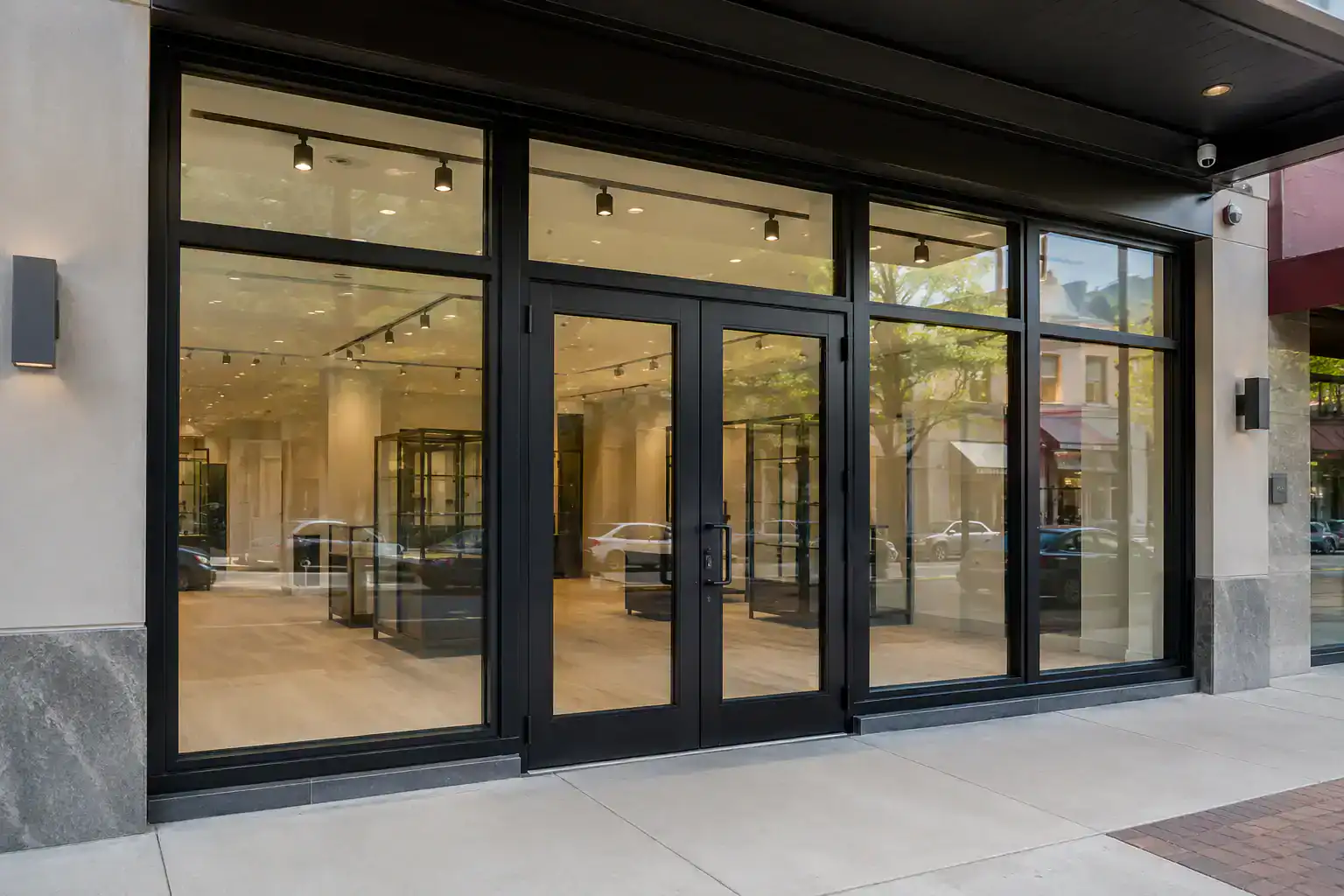
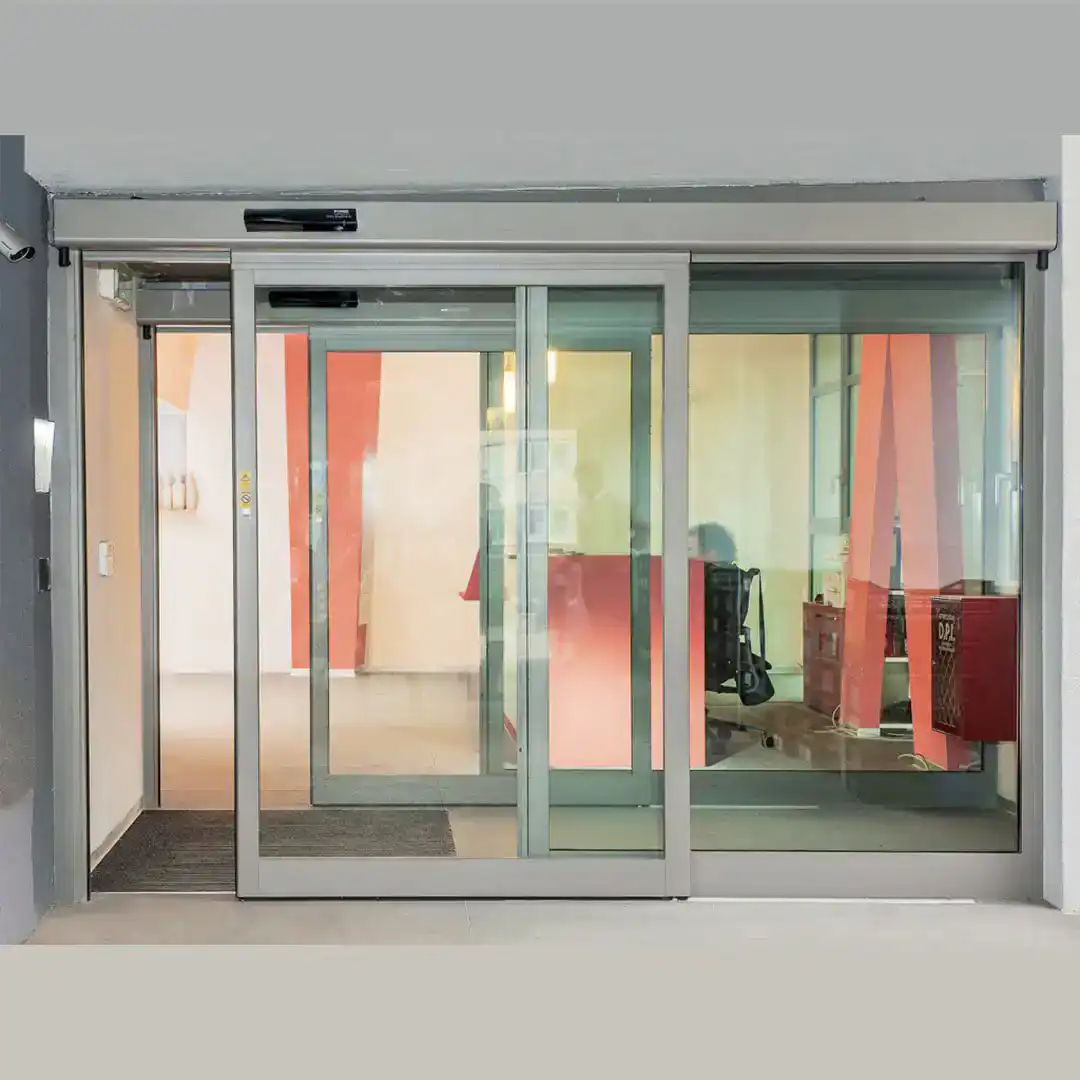
We manufacture complete ballistic glazing systems — not just glass, but the entire assembly. That includes bullet resistant windows in aluminum and steel framing, bullet resistant doors rated for both ballistic and blast threats, bullet resistant storefronts designed to match the architectural character of the building, bullet resistant curtain walls, and stainless steel transaction windows with deal tray systems for financial institutions and pharmacies. Fiberglass ballistic panels rated to UL 752 Levels 1 through 6 and our proprietary LytArmor Flex flexible ballistic panel round out the product line for applications where rigid panels won’t work.
For Maryland specifically, the dual bullet and blast resistant capability of our door and storefront systems is directly relevant to the defense and intelligence community operating around Fort Meade, Aberdeen Proving Ground, and Naval Air Station Patuxent River. Blast-rated systems aren’t a specialty add-on — they’re part of our standard product line.
Maryland’s pharmacy sector has lost 37 locations since 2023 due to sustained retail theft pressure. For the pharmacies that remain open in Baltimore City, Prince George’s County, and other high-risk corridors along I-95 and US 1, we engineer bullet resistant transaction windows and counter barrier systems specifically for retail pharmacy environments — accessible enough to maintain normal operations, protective enough to stop an armed threat. Coverage spans UL 752 Levels 1 through 10, which means whether you’re specifying for a neighborhood pharmacy or a classified federal facility, there’s a rated system for the application.
For most Maryland bank branches and credit unions — including those in the Baltimore metro, the Montgomery County suburbs, and the Prince George’s County corridor — UL 752 Level 3 is the standard starting point for teller barrier systems. Level 3 is rated for .44 Magnum threats and covers the handgun calibers that account for the vast majority of armed robbery incidents. The FBI’s July 2024 advisory specifically flagged armed “jugging” robberies targeting Maryland bank customers, and the indictment of seven suspects for 34 such robberies in five Maryland counties in May 2025 confirms this is an active, organized threat.
The right level depends on your specific branch location, layout, and the nature of your cash-handling operation. A branch in a high-traffic Baltimore City corridor may warrant a different specification than a suburban Annapolis location. Our engineering team can walk through the threat profile with you and recommend the appropriate UL 752 level without pushing you toward more protection than the application actually requires.
Yes. Physical security upgrades including bullet resistant glazing for school entryways, reception areas, and administrative offices are consistent with the types of improvements funded through Maryland’s School Safety Grant Program under Education Article §5-317. The program distributed $10 million to 24 local education agencies in FY 2021, and the School Safety Enhancement Act of 2024 proposed doubling the annual appropriation to $20 million beginning in FY 2026.
To access grant funding for a glazing project, your school or district will need documentation from the manufacturer: UL 752 certifications, product specifications, and technical data sheets that confirm the system meets the required protection standard. We provide that full documentation package as part of the project process. School projects in Maryland typically schedule installation during summer break to avoid disrupting the academic year, and our ready-to-assemble system design makes that compressed installation window manageable.
Yes. Commercial bullet resistant glass installations in Maryland require building permits, administered by local jurisdictions under Maryland’s statewide building code framework — which is based on the 2018 International Building Code with Maryland-specific amendments, effective March 2019. Maryland also has its own Safety Glazing law under Public Safety Article, Title 12, Subtitle 4, which supplements IBC Chapter 24 requirements for glazing in commercial, institutional, and public buildings.
Your permit application will need to include product specifications, UL 752 certifications, and — for structural or load-bearing applications — engineering documentation. Baltimore City, Montgomery County, and Prince George’s County each administer permits through their own local building departments, so the specific submittal requirements can vary. We provide the technical documentation package that contractors and architects need to move through the permit process: 3-part specifications, CAD drawings, and certified test reports. For federal facilities in Maryland, GSA P100 requirements add another layer of documentation, which our PE-led engineering team is equipped to support.
Security film and bullet resistant glass are not the same thing, and they don’t perform the same way. Security film is applied to existing glass and can help hold shattered glass together after an impact, but it has not been independently tested and certified under UL 752 standards. No film product currently on the market carries a UL 752 rating, which means it cannot be specified as bullet resistant glazing for applications that require certified protection — including federal facilities in Maryland, school safety grant-funded projects, and financial institutions with regulatory security requirements.
For Maryland businesses responding to real armed threats — whether that’s a pharmacy in Baltimore City dealing with smash-and-grab pressure or a bank branch in Howard County following the FBI’s jugging robbery advisory — film is not a substitute for a rated system. Rated bullet resistant glass systems, paired with properly rated frames and hardware, are tested as a complete assembly to confirm they perform at the specified UL 752 level.
A properly installed bullet resistant glass system typically lasts 15 to 20 years before yellowing or optical degradation becomes an issue. In Maryland’s climate, which brings hot, humid summers and cold winters with significant precipitation, UV exposure and temperature cycling are real factors that affect how acrylic and polycarbonate materials age over time. Systems with UV-resistant coatings will hold up better in Maryland’s weather conditions than uncoated alternatives.
The most important replacement trigger isn’t age — it’s impact. If your bullet resistant glass takes a hit, it needs to be replaced regardless of how old it is. The structural integrity of the glazing is compromised after a ballistic impact, even if the glass appears intact from the outside. You may also want to consider replacement if the glass has developed significant crazing, if you’re renovating the surrounding storefront or lobby, or if your current protection level no longer matches the threat environment your Maryland location faces. We can assess your existing system and give you a straightforward answer on whether replacement is warranted.
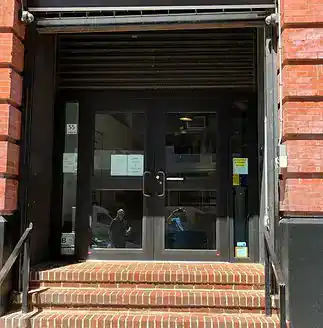
Yes, and it’s one of the more common project types we handle. Baltimore City has a large inventory of older commercial buildings — converted rowhouses, mid-century retail storefronts, and urban mixed-use structures — where the existing glazing is standard and the framing was never designed to support ballistic weight or rated hardware. Retrofitting these buildings with bullet resistant storefronts requires a system that’s been engineered to work within existing structural constraints, not just swapped in off a shelf.
We design systems specifically for retrofit applications. Our aluminum storefront series can be configured to match the dimensions and architectural character of an existing facade, so the upgrade integrates with the building rather than looking like an afterthought. Standard frames are not adequate for supporting ballistic glazing — the weight and the structural demands of a rated system require purpose-built framing. Our engineering team can review your building’s existing conditions and specify a system that works within them, including producing the documentation Baltimore City’s building department will need for the permit application.
Useful Links
Other Services we provide in Maryland