UL 752 Levels 1 Through 10
Our systems are independently tested and certified across the full UL 752 range, including rifle-rated Levels 7 and 8 for high-threat facilities.
Bulletproof Critical Infrastructure United States
U.S. substations, control rooms, and data centers are being targeted with rifle-caliber weapons. We build UL 752-certified ballistic systems - custom-engineered in the USA - that are actually rated for the threat your facility faces.
The Action difference
Our systems are independently tested and certified across the full UL 752 range, including rifle-rated Levels 7 and 8 for high-threat facilities.
Our co-leader holds a Professional Engineer license, meaning your specifications carry the engineering credibility regulators and specifiers require.
We have delivered UL 752-compliant ballistic systems for over 45 years - longer than most competitors have been in business.
Every system is engineered and manufactured in West Islip, New York - no foreign supply chain risk, no overseas delays on custom work.
Ballistic Protection for Utilities United States
The attacks on U.S. electrical substations in 2022 and 2023 did not use handguns. They used rifles. That distinction matters enormously, because most security glazing installed in utility facilities, data centers, and control rooms across the United States was never designed to stop a rifle round. It was designed for a different era and a different threat.
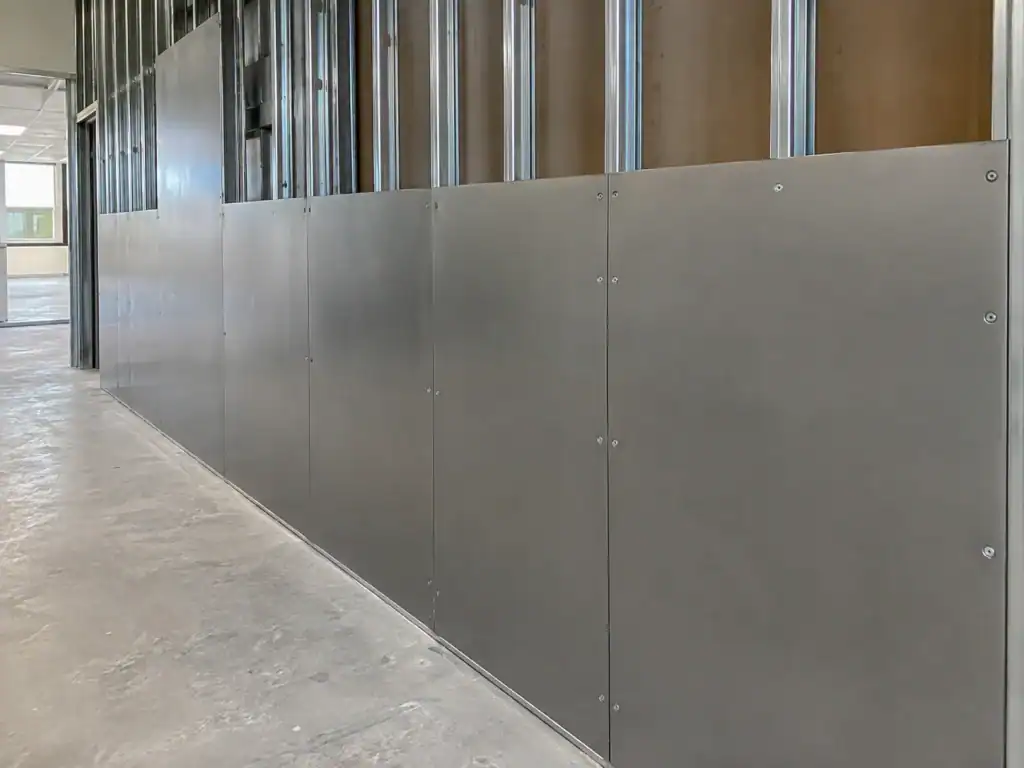
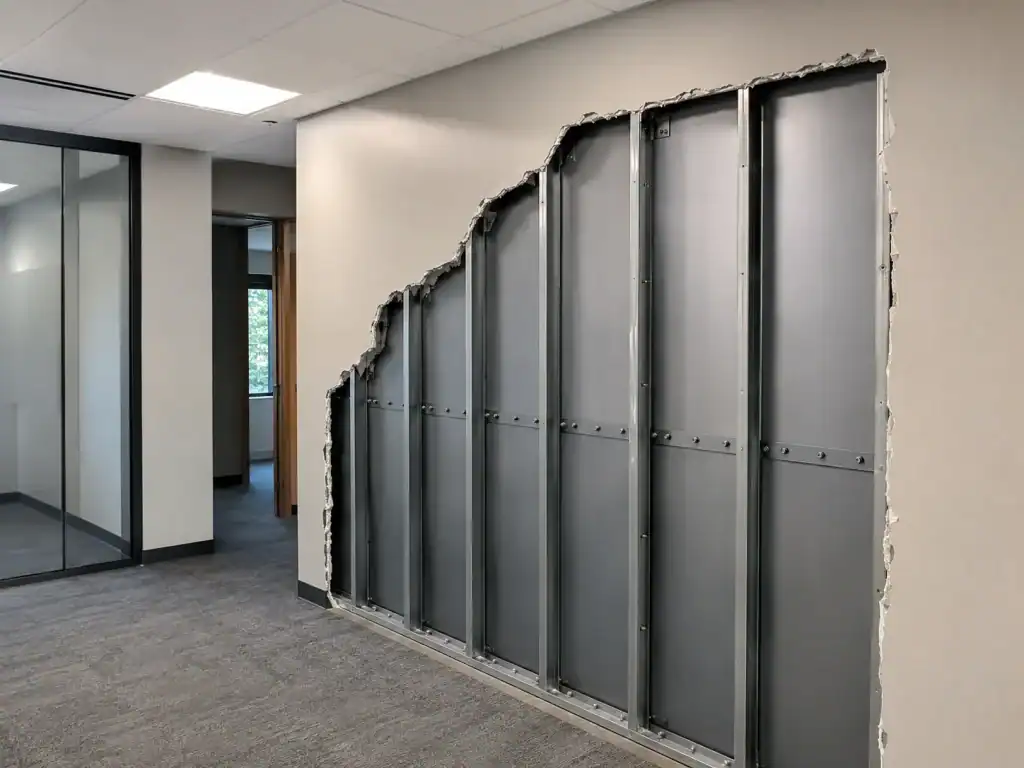
At Action Bullet Resistant, we manufacture custom-engineered ballistic systems - doors, windows, storefronts, curtain walls, transaction windows, and wall panels - that are UL 752-certified at the levels that actually correspond to today's documented threats. We work with utility operators, data center developers, government agencies, and facility managers across the United States to specify and deliver the right protection for each facility type, each threat profile, and each operational requirement.
Critical Infrastructure Protection United States
Utility Substation Security Barrier United States
Most critical infrastructure security conversations start and end at the perimeter - fences, vehicle barriers, cameras. Those are important. But they do not protect the control room window. They do not protect the entry door into the operations center. They do not protect the utility billing office where a customer service representative works behind standard glass, feet away from the public.
When a perimeter is breached - or when the threat is an insider - the next line of defense is the architectural barrier. That is where we work. Our ballistic doors, windows, and transaction systems are designed for the interior and semi-interior vulnerability points that perimeter-only strategies leave completely exposed.
For utility substations across the United States, this means hardening the control building entry, the operator window, and any glazed opening that faces an accessible area. For data centers, it means ballistic-rated entry systems and curtain wall protection at the facility's most exposed faces. For power plant security windows and 911 dispatch centers, it means systems that meet UL 752 Level 7 or Level 8 - the levels specifically recommended for these facility types.


Control Room Ballistic Barrier United States
One of the practical challenges in hardening a critical infrastructure facility is vendor coordination. When ballistic glazing comes from one manufacturer, the door frame from another, and the transaction window from a third, system-wide performance is only as strong as the weakest interface. Gaps between systems are where protection fails.
We manufacture the full range - ballistic doors, windows, storefronts, curtain walls, transaction windows, and wall panels - from a single facility in West Islip, New York. That means every component is engineered to work together, every interface is accounted for, and there is one point of contact for the entire system. For data center security barriers, utility substation barriers, and control room ballistic barriers across the United States, that single-source approach eliminates the coordination risk that multi-vendor projects carry.
Our systems also integrate ballistic and blast resistance in a single assembly. For facilities where NERC CIP-014 compliance or federal security standards require multi-threat protection, that integration is not a luxury - it is the specification.
Data Center Security Barrier United States
We start by understanding your facility type, threat profile, and regulatory requirements - so we specify the right UL 752 level, not just the most common one.
Every system is custom-manufactured to your facility's exact dimensions using precision CNC fabrication at our West Islip, New York facility.
We deliver ready-to-assemble systems and provide technical support to your glazing contractor or project team through completion - no handoff gaps.
The right level depends on your documented threat profile, but for utility substations, power plant security windows, and 911 dispatch centers in the United States, UL 752 Level 7 or Level 8 is typically the appropriate specification. Level 7 is rated for five shots from a 5.56mm rifle - the type used in several recent U.S. substation attacks. Level 8 steps up to five shots from a 7.62mm rifle. Lower levels stop handgun rounds, which is meaningful protection in many settings, but does not address the rifle-caliber threat that has characterized attacks on U.S. grid infrastructure. We can walk through your specific facility and threat assessment to help you land on the right level - one that is neither under-specified nor unnecessarily over-built for your situation.
NERC CIP-014 requires that covered utilities conduct a physical security risk assessment of their transmission stations and substations and implement a documented physical security plan to address identified risks. The standard explicitly recognizes ballistic protection as a valid mitigation measure. Whether it is required at your specific facility depends on your risk assessment findings and the threats identified - but if your assessment identifies gunfire as a credible risk (which DHS and DOE threat bulletins consistently indicate it should be for many U.S. utilities), then ballistic protection is not optional under a compliant security plan. Our UL 752-certified systems provide the documented, independently tested performance that regulators look for when reviewing those plans.
Yes, and this is one of the most common concerns we hear from utility operators and data center managers across the United States. Control room operators need clear sightlines. Customer service staff need to interact with the public. The facility cannot go dark for weeks during an installation. Our systems are custom-engineered to fit the existing architectural layout of your facility, which means they integrate into your space rather than forcing your operations to work around them. Transaction windows maintain communication functionality. Ballistic glazing maintains visibility. And because our systems are manufactured as ready-to-assemble assemblies, installation is significantly faster than field-fabricated alternatives, minimizing operational disruption.
There is no such thing as bulletproof. Every ballistic protection system is rated to resist a specific type and number of rounds at a specific velocity - that is what UL 752 testing measures. The term "bulletproof" is marketing language, not a testable standard. When you see it used without a corresponding UL 752 level or NIJ rating, you are looking at an unverifiable claim. This distinction matters for critical infrastructure buyers in the United States because regulatory bodies, insurance carriers, and legal counsel all want to see documented, independently tested performance - not manufacturer assertions. Our systems are certified to UL 752 Levels 1 through 10 and NIJ Levels I through III, with third-party test documentation you can include in your NERC CIP compliance plan.
Data centers present a specific set of integration challenges that typical security glazing vendors are not equipped to handle. Your HVAC system, fire suppression, cable management, and access control infrastructure all have to coexist with the ballistic barrier - and in many cases, the barrier has to be designed around those systems rather than the other way around. We custom-engineer every system to the specific facility layout, which means we can accommodate the environmental and infrastructure constraints that data centers impose. For data center security barriers across the United States, we typically work from architectural drawings provided by the project team and engineer the ballistic assembly to fit within the existing building envelope without compromising the facility's critical systems.
For many critical infrastructure operators in the United States, it makes a significant difference. Federal procurement preferences under Buy American requirements apply to a wide range of government-adjacent and federally funded projects. Beyond compliance, domestic manufacturing eliminates the international shipping delays and foreign supply chain risks that have disrupted infrastructure projects in recent years. Every system we manufacture is built in West Islip, New York - which also means our engineering team is accessible throughout the project, lead times on custom work are not subject to overseas logistics, and there is no ambiguity about where your ballistic system was made or who stands behind it. For facilities with federal funding, that domestic origin is often not a preference - it is a requirement.
Start with the right specification
Send us your drawings, your requirements, or your questions. Talk with the team that engineers and manufactures your system.